
Winning a screening review for an Ontario public-sector role comes down to one discipline: tailor every line of your résumé and cover letter to the qualifications named in the job ad, back each one with a measurable accomplishment, and keep the whole package inside the Ontario Public Service’s recommended page limit. Skip any one of those three and a screener has no reason to move your application forward. If you’re short on time or want a second set of eyes, professionalresumes.ca’s Government & Public Sector resume service builds these documents for you against the exact criteria hiring panels use.
TL;DR:
- Tailor each résumé and cover letter to the specific qualifications in the job ad, using exact language and measurable accomplishments for each requirement.
- Applications are screened against a checklist, and failure to address “must-have” qualifications clearly results in automatic disqualification.
- Keep your combined application within five pages, using plain formatting, standard fonts, and no personal identifiers like your Social Insurance Number or photo.
- Use a chronological résumé format for clarity, starting with your most recent roles, and prioritize relevance by reordering bullets to highlight key achievements first.
- Prepare for written assessments and structured interviews by practicing results-based examples grounded in the STAR or PAR framework, addressing qualifications with concrete metrics.
Table of Contents
- How hiring panels and screening work in Ontario public-sector competitions
- OPS length, structure and plain-format rules you must follow
- Step-by-step method to tailor your résumé to any government job ad
- Write accomplishment statements that score: STAR and PAR explained with examples
- Cover letter strategy that supports, not repeats, the résumé
- ATS, file formats and a final submission checklist
- Common application mistakes and quick fixes
- How professionalresumes.ca helps applicants win government competitions
- Guidance on preparing for possible written tests or assessments
- Interview preparation specific to Ontario government interviews
- Explanation of eligibility criteria and priority groups for Ontario government hiring
- Tips for navigating the online application portal specific to Ontario government jobs
- Information on required supporting documents beyond your résumé and cover letter
- Writer’s perspective: practical reassurance and final tips
- Get a government-ready resume built for the job you actually want
- Sources
- FAQ
How hiring panels and screening work in Ontario public-sector competitions
Every résumé and cover letter submitted before the closing date gets read against a checklist, not a first impression. Ontario’s own hiring process page confirms that all applications received by the deadline are screened and rated against the qualifications outlined in the job ad, and only the applicants whose documents demonstrate those qualifications clearly enough move on to interviews, tests, or presentations.
This matters more in government hiring than almost anywhere else in the private sector, because the process is built for defensibility. A hiring panel at a ministry, a municipality, or an agency like the TTC has to justify why one candidate advanced and another didn’t, often against a formal grievance or audit process. That means screeners aren’t looking for a general impression of competence. They’re looking for specific phrases from the job posting reflected back at them in your bullet points.
Here’s what typically happens after you hit submit:
- Your application lands in a tracking system alongside every other submission received by the deadline.
- A screener (sometimes HR, sometimes the hiring manager, often both) checks your résumé and cover letter against each listed qualification.
- Applications that don’t clearly address a “must have” qualification are usually screened out at this stage, regardless of overall experience.
- Shortlisted candidates move to assessments, which can include written tests, skills demonstrations, or panel interviews.
- Unsuccessful applicants are frequently told only that “regrets” will follow if they’re not selected, which is why you rarely get feedback on why you were screened out.
Timelines vary by ministry and by competition, but municipal and provincial postings often take several weeks between the closing date and first interviews, longer for high-volume competitions like intake postings at large agencies. Patience is part of the process. So is precision, since the screener reviewing your file may spend less than a minute deciding whether to advance you.
OPS length, structure and plain-format rules you must follow
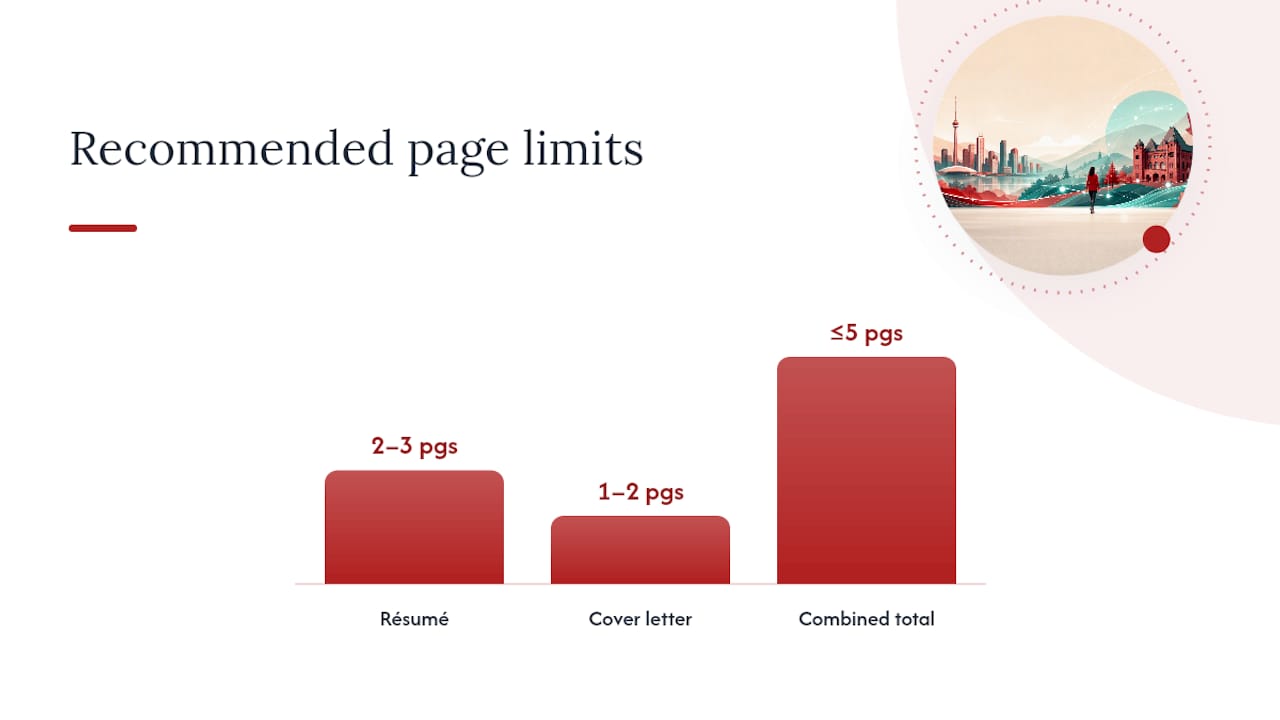
Ontario Public Service guidance recommends specific length limits, and ignoring it is one of the fastest ways to get filtered out before anyone reads your accomplishments. The OPS Cover Letter and Résumé Writing Guide recommends keeping your combined application, cover letter plus résumé, within the recommended five pages total.
Format rules that matter:
- Use a standard, readable font (Calibri, Arial, or a similar sans serif) at 11-point or larger.
- Skip graphics, tables with shading, headshots, and decorative borders. Screening software and human reviewers both prefer plain text blocks.
- Never include a photo, your Social Insurance Number, birthdate, or marital status. Government identity guidance is explicit that your SIN has no place on a job application, and including one is a red flag, not a credential.
- Left-align text, avoid columns, and use consistent bullet styling throughout.
On page counts, the guide’s benchmark breaks down like this:
| Document | Recommended length |
|---|---|
| Résumé | 2 to 3 pages |
| Cover letter | 1 to 2 pages |
| Combined total | 5 pages or less |
Student and early-career applicants get a slightly tighter standard: the OPS student tip sheet recommends résumés run no longer than three pages, with clear, action-verb-driven bullets rather than dense paragraphs.
Chronological format, listing roles in reverse date order, works for most government applicants because panels want to see career progression and recent relevance at a glance. A functional format, organized by skill category instead of job history, only makes sense if you’re changing careers entirely or have gaps that a strict timeline would highlight unfavourably. When in doubt, chronological is the safer, more scannable choice for both a human reviewer and an applicant tracking system.
Step-by-step method to tailor your résumé to any government job ad
Tailoring isn’t a vague suggestion here. It’s the entire screening mechanism, and Ontario’s guidance treats using the job ad as a checklist as close to mandatory for anyone who wants to advance past the first cut.
- Print or copy the full job ad, including the “Qualifications” and “What can I bring to this role” sections. These sections contain the exact language screeners will search for.
- Extract every qualification phrase verbatim. If the ad says “demonstrated experience in stakeholder consultation,” write that phrase down exactly. Don’t paraphrase it to “worked with community groups.”
- Build a two-column mapping table with the qualification in one column and your matching résumé bullet in the other. If you can’t fill a row, that’s a gap you need to address or accept before applying.
- Rewrite each résumé bullet to mirror the ad’s language, as long as it’s true. If the posting asks for “budget management experience,” and you managed a $40,000 program budget, say so using that phrasing rather than a synonym.
- Cut anything that doesn’t map to a qualification. A decade-old retail job with no relevance to a policy analyst posting is taking up space that a matched accomplishment could fill.
- Reorder bullets within each role so the most relevant achievement appears first, since screeners often stop reading a bullet block after the first two or three lines.
Here’s what that rewrite looks like in practice:
Before: “Responsible for various administrative duties and supporting the team.”
After: “Coordinated scheduling and correspondence for a 12-person program team, reducing meeting-booking turnaround from three days to one.”
Before: “Worked on community programs.”
After: “Delivered community engagement sessions for a municipal recreation program, reaching over 300 residents across four wards.”
The difference isn’t length. It’s specificity tied directly to something a screener can check off. Municipal postings, TTC operations and administrative roles, and provincial ministry competitions all use some version of this qualifications-first review, so the mapping exercise is worth repeating for every application rather than reusing one generic résumé.
Write accomplishment statements that score: STAR and PAR explained with examples
Government panels consistently favour results-based writing over duty-based writing, and the reason is simple: a duty tells a screener what you were assigned, while a result tells them what you actually changed. The STAR framework, Situation, Task, Action, Result, and its close cousin PAR (Problem, Action, Result) both force you to end every bullet with a measurable outcome rather than a job description.
Three quick examples, one per common role type:
- Administrative: “Processed an average of 45 procurement requests per month for a municipal facilities division, cutting average approval time from 9 days to 4 by introducing a standardized intake form.”
- Program delivery: “Led onboarding for a new youth employment program serving 120 participants annually, achieving an 87% program completion rate in its first year.”
- Data and analyst roles: “Built a monthly reporting dashboard tracking service request volumes across 6 departments, reducing manual reporting time by roughly 6 hours per week.”
Notice each one includes a number: people served, hours saved, percentage improved, dollars managed. That’s not decoration. A quantified claim is easier for a screener to score against a “demonstrated results” qualification than a qualitative one.
A few practical rules for scope and framing:
- Keep the timeframe specific (“over 18 months,” “in Q3 2025”) rather than vague (“recently” or “over time”).
- Choose metrics the screener can actually picture: dollars, hours, people served, percentage change, or volume processed all work well.
- Don’t inflate scope. If you contributed to a team project, say “contributed to” or “supported,” not “led,” unless you genuinely ran it.
- One strong, verified number beats three soft claims. If you don’t have a hard figure, describe scale honestly (team size, budget range, duration) instead of inventing precision.
Cover letter strategy that supports, not repeats, the résumé
A government cover letter has one job the résumé can’t do on its own: connect your background to the role in plain narrative language, in one to two pages, without repeating bullet points verbatim.
Opening paragraph: Name the exact position title and job ID, and state briefly why you’re applying. Skip the generic “I am writing to express interest” line; a screener reads dozens of those a day, and it wastes your first sentence.
Middle section: Choose two or three of the posting’s top qualifications, the ones that appear first or are repeated, and explain in narrative form how your experience meets them. This is where you connect dots the résumé can only list: why a project mattered, what pressure you were under, why the result was hard to achieve.
Closing paragraph: Confirm your availability, thank the reader for their consideration, and close professionally. Keep it short. This section does not need new evidence.
A few tone and structure notes specific to government readers:
- Address the letter to the named contact if one is given; otherwise use “Hiring Committee” rather than a guessed name.
- Keep sentences direct and avoid overly casual language. Government readers expect a formal, professional register, not corporate marketing tone.
- Never copy résumé bullets word for word into the letter. If a bullet says “reduced report turnaround by 50%,” the letter should explain why that mattered to the team or the public, not restate the number alone.
- One page is often enough for entry to mid-level roles. Reserve two pages for senior or specialized competitions where you have several qualifications to address in depth.
ATS, file formats and a final submission checklist
Most Ontario government job portals accept a narrow set of file types, and getting this wrong can knock your application out before a human ever opens it. PDF is generally the safest choice because it preserves formatting across devices, but many postings also accept .doc, .docx, .txt, or .rtf files. Always check the specific posting instructions, since some municipal and agency portals (including TTC postings) have their own upload rules distinct from the provincial ontario.ca careers portal.
For most OPS postings, you’ll combine your cover letter and résumé into a single document rather than uploading them separately. Check the posting for this requirement before you format your files.
- Name your file clearly, using a convention like JobID_LastName_FirstName.pdf, and include the competition or Job ID number if the posting mentions one.
- Confirm your page count is within the five-page combined limit before saving your final version.
- Check contact information at the top of your résumé: current phone number and email, no mailing address required in most cases.
- Proofread out loud, since reading silently lets your eyes skip errors your ears will catch.
- Remove any SIN, birthdate, or photo if you added placeholder fields from an old template.
- Confirm language requirements listed in the posting; some roles specify English, French, or bilingual proficiency testing.
- Save your confirmation email or portal receipt once submitted. Portals don’t always send a second reminder, and you’ll want proof of the submission date if a competition timeline is disputed later.
An ATS-friendly formatting approach also helps when a municipality or agency runs your application through automated keyword screening before a human ever sees it, which is increasingly common for high-volume postings.
Common application mistakes and quick fixes
Most screened-out applications share the same handful of problems, and nearly all of them are fixable in an afternoon.
- Generic résumé, no tailoring. The single biggest cause of failed screening is submitting one résumé to every posting instead of mapping it to each job ad’s specific qualifications.
- Missing keyword phrases. If the ad says “risk assessment” and your résumé says “identified potential issues,” a screener or an automated system may not connect the two.
- Irrelevant history taking up space. A page of unrelated retail or hospitality experience from a decade ago pushes your strongest, most relevant accomplishment off the first page.
- Personal identifiers included by habit. SIN, birthdate, marital status, or a photo left over from an old template. None of these belong on a Canadian government application.
- Poor formatting choices. Columns, graphics, and inconsistent fonts can break when uploaded to a portal or scanned by tracking software.
Fast fixes:
- Rewrite your résumé’s summary or headline to name the exact job title you’re applying for.
- Add one or two accomplishment bullets with a specific metric, even a rough one, to each recent role.
- Trim any role older than 10 to 15 years unless it’s directly relevant to the qualifications listed.
- Reformat in plain text style and re-save as a PDF before uploading.
Pro Tip: Before you submit, hand your résumé to someone who has never worked with you and ask them to summarize what you’re good at in one sentence, based only on what’s written. If their summary doesn’t match the qualifications in the job ad, a screener won’t make that connection either.
A simple peer-review pass, even a five-minute read by a colleague or friend, catches typos and unclear phrasing that you’ve read past a dozen times already.
How professionalresumes.ca helps applicants win government competitions
Building a résumé that maps cleanly to OPS qualification language, stays inside a five-page limit, and reads well to both a screener and an ATS is a specific skill, and it’s the one professionalresumes.ca’s Government & Public Sector resume service is built around. The service works from the actual job posting you’re applying to, not a generic template, and structures your résumé and cover letter around the exact qualifications a hiring panel will be scoring.
Three product paths cover most reader situations:
- Advanced Resume suits applicants who already have a working draft but need a professional rewrite focused on accomplishment language, keyword alignment, and page-limit compliance.
- Advanced Package Deal combines a résumé rewrite with a cover letter and LinkedIn profile overhaul, built for anyone applying to multiple competitions or making a career pivot into the public sector.
- Early Career Resume is designed for recent graduates and first-time public-sector applicants who need a concise, tailored document without years of work history to draw from.
Each option is built through direct consultation, working from your background and the specific postings you’re targeting, with revisions included so the final draft reflects real qualification language rather than boilerplate phrasing. For readers weighing whether to write this themselves or bring in help, the honest answer depends on how many competitions you’re applying to and how much time you have before each closing date.
Guidance on preparing for possible written tests or assessments
Many OPS, municipal, and agency competitions include a written test between the résumé screen and the interview stage, especially for policy, administrative, and analyst roles. These tests typically assess writing clarity, situational judgment, or technical knowledge specific to the role rather than general aptitude.
If the posting mentions a written component, prepare the way you would for the résumé itself: reread the qualifications and think through how you’d demonstrate each one in a timed writing scenario. Situational judgment tests often present a workplace scenario and ask you to choose or write the most appropriate response, so practising concise, professional writing under time pressure helps more than memorizing facts.
For technical or policy-writing assessments, review any public reports, briefing notes, or similar documents from the hiring ministry or municipality if they’re publicly available. This gives you a sense of the tone and structure they expect. Time management matters as much as content: many candidates lose marks by spending too long on the first section and rushing the rest.
If you’re unsure whether a posting includes a written test, it’s reasonable to ask the contact listed in the job ad once you’re shortlisted. Knowing the format in advance, whether it’s a timed essay, a multiple-choice policy quiz, or a scenario response, lets you prepare accordingly instead of walking in cold.
Interview preparation specific to Ontario government interviews
Government interviews are almost always structured and behavioural, meaning every panellist asks the same questions in the same order and scores your answers against a rubric tied to the job’s qualifications. This is different from a private-sector conversational interview, and treating it that way is a common mistake.
Prepare a STAR or PAR example for every qualification listed in the job ad, not just the ones you feel confident about. Panels frequently ask “Tell me about a time when…” questions that map directly to the posting’s requirements, so the accomplishment statements you wrote for your résumé are a strong starting point for interview answers.
Expect multiple panellists, sometimes three or four, taking notes throughout. This is standard practice for fairness and documentation purposes, not a sign the interview is going poorly.
Some roles, particularly those in policing-adjacent agencies, finance, or infrastructure security, require a security clearance or background check after a conditional offer. If a posting mentions this, be prepared for reference checks, and in some cases a credit or criminal record check, before your start date is confirmed. Municipal transit agencies like the TTC and provincial ministries handling sensitive data both use this step for relevant positions, so don’t be surprised if it’s part of your specific process.
Explanation of eligibility criteria and priority groups for Ontario government hiring
Most Ontario public-sector postings are open to any qualified applicant who meets the education, experience, and legal requirements listed in the ad, including being legally entitled to work in Canada. Some competitions are restricted, meaning only current employees of that ministry, agency, or municipality can apply, so always check whether a posting says “open” or “internal only” before investing time in an application.
Certain groups receive priority consideration under specific circumstances. Employees on a workforce adjustment list, laid off through restructuring, are often given first consideration for matching vacancies before a competition opens to external applicants. Some postings also note accommodation-related priority hiring under provincial employment equity frameworks, and Indigenous-specific hiring initiatives exist at several ministries and municipalities.
If a posting lists specific education or certification requirements, such as a professional designation or a degree in a named field, these are typically firm requirements rather than “nice to have” preferences. Government job ads distinguish between “required” qualifications and “asset” qualifications, and it’s worth reading that distinction carefully. Meeting every required qualification matters more for screening than exceeding an asset qualification while missing a required one.
Tips for navigating the online application portal specific to Ontario government jobs
Provincial postings run through the ontario.ca careers portal, while municipalities and agencies like the TTC typically run their own separate application systems. Each has its own login, its own upload limits, and its own quirks, so budget extra time the first time you apply to a new employer’s system rather than assuming it works like the last one.
Create your portal profile well before a deadline, since some systems require you to build a candidate profile, upload documents, and answer screening questions in separate steps that can take longer than expected. Screening questions, often yes/no or short-answer fields asking about specific qualifications, sometimes act as an automatic filter before a human even sees your résumé. Answer them precisely and honestly; vague answers here can screen you out before your documents are reviewed.
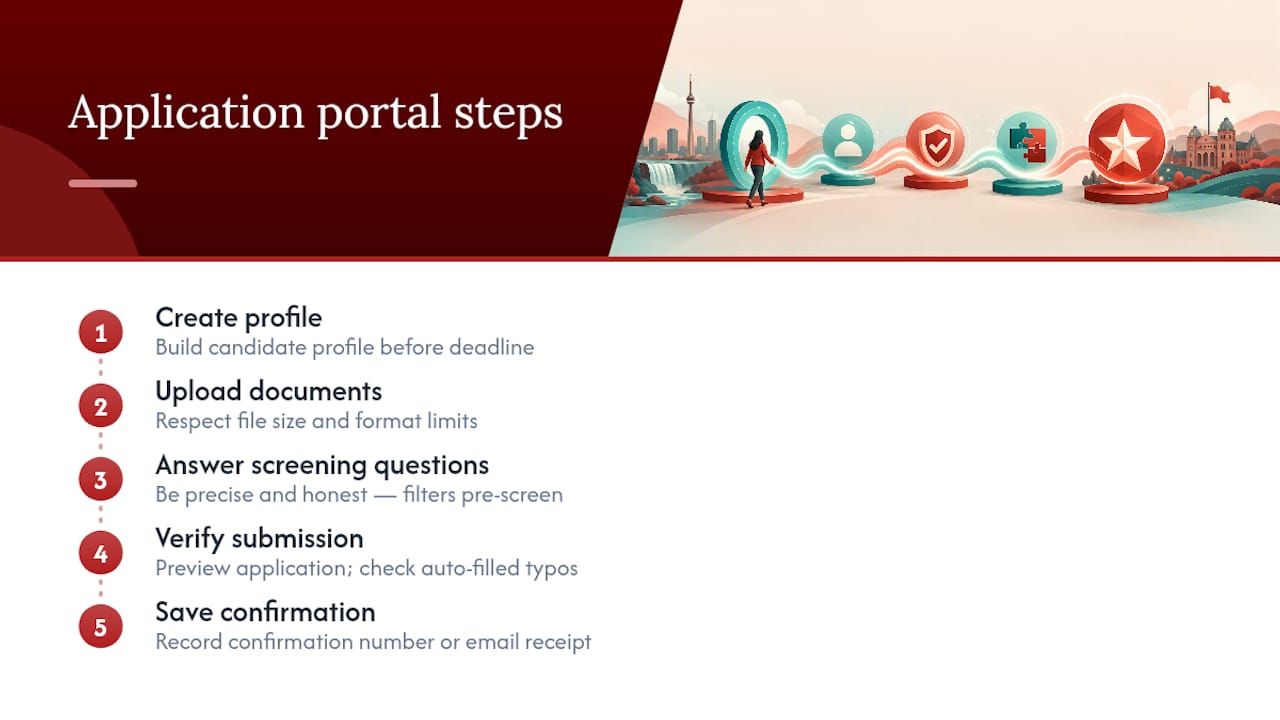
Double-check file upload confirmations. Some portals silently fail to attach a document if the file is too large or in an unsupported format, and you won’t always get an error message. After submitting, look for a confirmation number or email, and save it. If a portal allows you to preview your submitted application, do so, since typos in auto-filled fields are common and easy to miss.
Information on required supporting documents beyond your résumé and cover letter
Depending on the role, you may need more than a résumé and cover letter to complete your application. Roles requiring a specific degree, diploma, or professional designation sometimes ask for unofficial transcripts at the application stage, though many competitions only request official transcripts after a conditional offer.
Some Ontario government job ads include an optional diversity self-identification form, used for statistical and equity-reporting purposes rather than for screening decisions. Completing it is voluntary and doesn’t affect your competitiveness for the role.
If the posting requires a specific certification, a first aid certificate, a professional licence, a security clearance eligibility, gather proof of that credential before you apply so you’re not scrambling to locate it once you’re shortlisted. Some municipal and transit-agency postings, including certain TTC operational roles, also require a valid driver’s licence abstract or a criminal background check consent form as part of the conditional offer stage. Read the “how to apply” section of every posting closely, since requirements vary meaningfully between a provincial ministry role, a municipal position, and an agency posting even when the job titles look similar.
Writer’s perspective: practical reassurance and final tips
The applicants who succeed at this aren’t necessarily the most qualified people in the pool. They’re the ones who took the job ad seriously enough to rewrite their résumé line by line against it, instead of sending the same document to every posting and hoping volume would work in their favour. That’s the pattern worth trusting: small, specific changes, a mirrored phrase here, a quantified result there, move you further than a complete overhaul with no real tailoring behind it.
Municipalities, agencies like the TTC, and provincial ministries all run some version of the same qualifications-first screening, so the discipline you build for one application carries into the next. Expect the process to take time, and don’t read a slow timeline as a rejection. If you’d rather have someone build that tailored document with you than do it alone at midnight before a deadline, that’s exactly what our Government & Public Sector resume service is there for.
— Professional
Get a government-ready resume built for the job you actually want
Writing five pages that satisfy OPS format rules, mirror a job ad’s exact qualification language, and still read like a real person wrote them takes hours most job seekers don’t have between work, applications, and everything else. A professional resume service can build that document with you, working from the specific posting you’re targeting instead of a recycled template, so every bullet maps to something a screener is actually scoring.
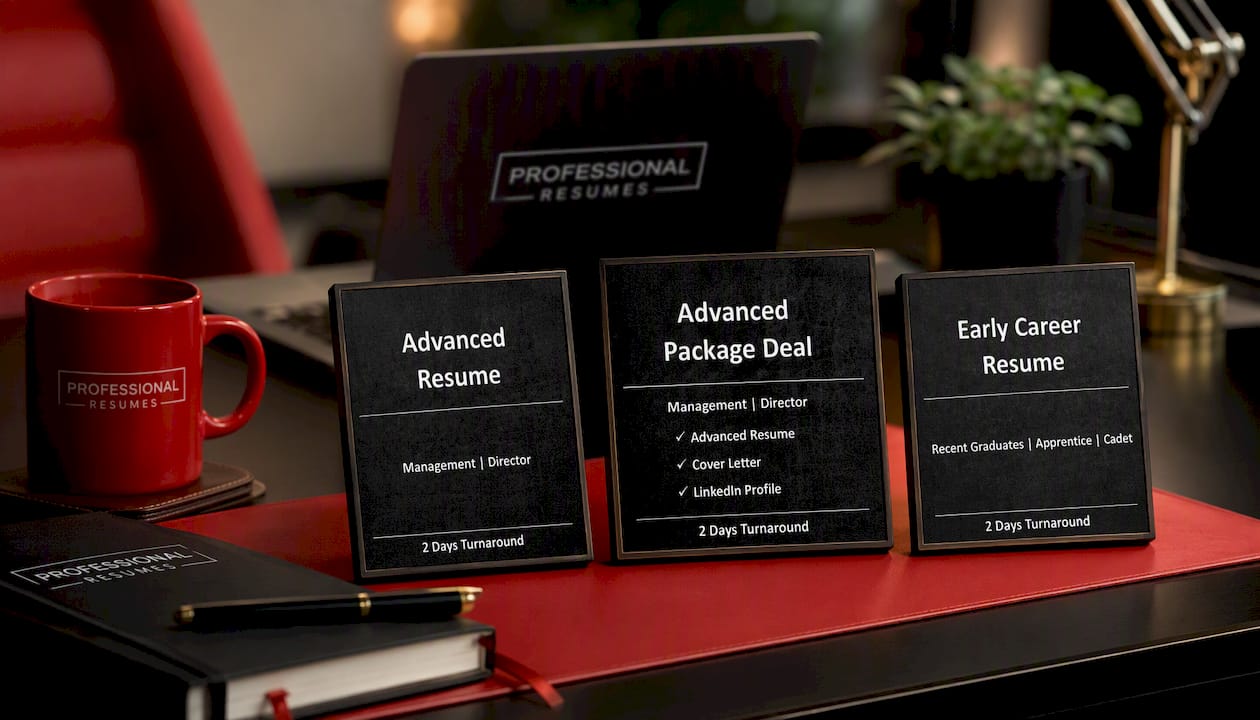
Three paths cover most situations. The Advanced Resume rebuilds an existing résumé around accomplishment language and keyword alignment. The Advanced Package Deal adds a matching cover letter and LinkedIn profile for applicants juggling multiple competitions. The Early Career Resume is built for recent graduates and first-time public-sector applicants with a shorter work history to draw from. Whichever fits your situation, start by booking a consultation through the Government & Public Sector resumes page and bring the job posting you’re targeting to that first conversation.
FAQ
How do you format a résumé for a government job?
Use a plain, single-column layout with a standard font at 11-point or larger, keep your résumé to 2 to 3 pages, and remove personal identifiers like your SIN or birthdate before submitting.
How do you write a resume that actually lands a job?
Extract the exact qualification phrases from the job ad, map each one to a quantified accomplishment on your résumé, and cut anything that doesn’t connect to the posting’s requirements.
What is the seven second rule in résumé writing?
It refers to the idea that a reviewer forms an initial impression of your résumé within the first few seconds of scanning it, which is why your strongest, most relevant accomplishment needs to appear near the top of the page rather than buried further down.
What are three don’ts in résumé writing?
Don’t submit the same generic résumé to every posting, don’t include personal identifiers like your Social Insurance Number or birthdate, and don’t list duties without measurable results attached to them.
How long should an Ontario government application be?
Ontario Public Service guidance recommends a combined cover letter and résumé of five pages or less, with the résumé running 2 to 3 pages and the cover letter 1 to 2 pages.