
Yes, a cold cover letter is worth sending when you’re targeting a company or role you genuinely want, even without a posted opening. For most first contact, a short cold email outperforms a full letter. Reserve a one-page speculative cover letter for senior executives or roles where a formal document signals seriousness. If you hear nothing back, follow up once, after seven to ten days.
TL;DR:
- Sending a highly personalized cold cover letter can create new opportunities, especially if targeted to a specific contact and tailored to the company’s needs.
- Keep outreach brief, focusing on one clear value proposition with a verifiable example, and avoid asking for direct employment, instead requesting small, low-friction actions.
- Follow up politely after seven to ten days if there is no response, as persistence enhances the chance of engagement without damaging relationships.
- Avoid generic templates and spelling errors, and heavily edit AI-generated drafts to include genuine, specific details that reflect your actual experience.
- Using physical portfolios in design or trades can outperform emails, and hiring professional writers is advisable when reaching senior contacts or transitioning into new industries.
Table of Contents
- What is a cold cover letter and when should you use one?
- How do you write and send a cold cover letter that gets read?
- What common mistakes kill your reply rate?
- What do a cold email and a speculative letter actually look like?
- When is it worth hiring a professional writer instead?
- Why authenticity beats polish in 2026 hiring
- Get expert help writing outreach that lands
- Sources
- FAQ
What is a cold cover letter and when should you use one?
A cold cover letter, also called a speculative cover letter or unsolicited job application, is a message sent to a company without a corresponding job posting. It differs from a standard cover letter in one critical way: there’s no advertised role to respond to, so you’re creating the opportunity for a conversation rather than answering one. The goal isn’t always a direct hire. More often, a strong letter of interest for a job opens a conversation, secures an informational interview, or puts your name in front of a hiring manager before a role even exists.
Career resources describe this as a proactive way to get on a company’s radar, and it works because it operates on a different timeline than reactive applications. You’re not competing against fifty other candidates for one posting. You’re the only unsolicited job application that manager received this month, which changes the dynamic entirely.
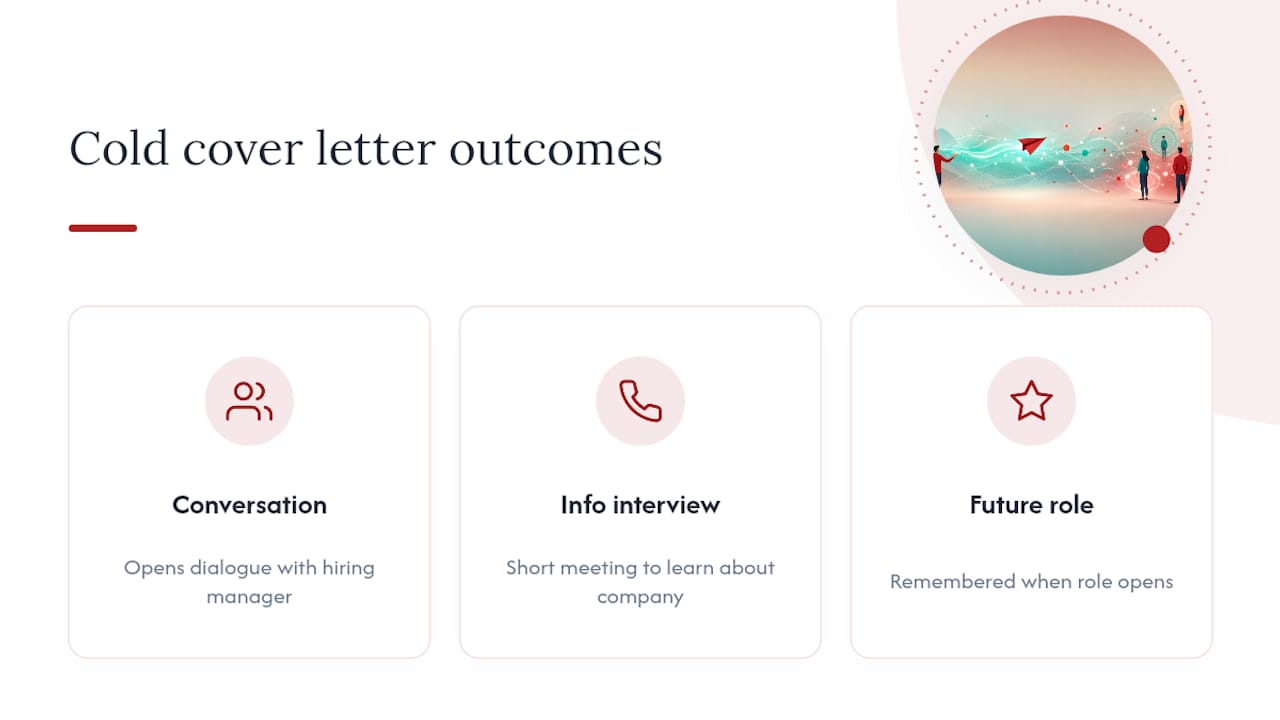
Set realistic expectations. Most cold outreach leads to networking, referrals to other openings, or a “keep in touch” response rather than an immediate offer. That’s still valuable. A contact who remembers you favourably when a role does open is worth more than another anonymous application in an applicant tracking system.
How do you write and send a cold cover letter that gets read?
Treat this as a sequence, not a single draft you fire off in ten minutes.
- Research the company and confirm the right contact. Don’t send this to a generic careers inbox. Find the hiring manager or team lead on LinkedIn, check the company’s recent news or a specific project, and confirm the spelling of their name and title before you write a word.
- Decide between an email and a letter. A short cold outreach letter sent as an email works for most situations, especially early and mid-career outreach. Switch to a formatted one-page letter when you’re approaching a senior executive, applying in a field where a portfolio or writing sample matters, or when the company culture leans formal (law, finance, government).
- Write a subject line that earns the open. Vague subject lines get ignored. Try “Question about [Company]’s [specific project]” or “Referred by [mutual contact] regarding [team]” over anything generic like “Job Inquiry.”
- Open with a one-sentence hook. Tie yourself to a real company need in the first line: “I noticed [Company] recently expanded its supply chain team, and I’ve spent six years solving exactly that bottleneck.”
- Pitch your value in two or three lines. Quantify an outcome or point to one concrete example rather than listing your résumé. This is where most unsolicited cover letters lose the reader.
- Make a single, low-friction ask. Request a 15-minute call, an informational chat, or permission to send a portfolio. Don’t ask for a job outright.
- Follow up once, seven to ten days later. A brief, polite nudge referencing your original note is enough.
Cold outreach is frequently ignored, and the ones that land tend to demonstrate real understanding of the recipient’s work while making the ask easy to grant with minimal friction. That single idea, low friction, does more for your reply rate than any clever phrasing.
Pro Tip: In design, trades, or construction, a curated physical portfolio handed over in person can outperform a dozen polished emails. Tangible proof of work still moves people that a PDF attachment doesn’t.
What common mistakes kill your reply rate?
Most failed cold cover letters share the same handful of problems, and they’re all fixable once you see them named.
- Sending a letter that reads like it was generated in thirty seconds, with no company-specific detail anywhere in it.
- Listing five or six vague achievements instead of naming one project, metric, or link a reader can actually verify.
- Misspelling the recipient’s name or title, which signals you didn’t do the research you claimed to.
- Writing three pages when the reader will skim it in under a minute.
- Going silent after one attempt instead of following up, or burning a bridge after a polite no.
Recruiters increasingly notice when a cover letter looks machine-written, and that’s not a minor concern. Reporting on 2026 hiring trends shows recruiters growing wary of the flood of AI-polished applications now landing in their inboxes, and surveys suggest a meaningful share of them believe they can spot AI-generated submissions on sight. If you use AI to draft, edit it hard afterward. Add the one detail only you would know: the specific project you referenced, the actual number behind your claim, a phrase that sounds like you and not a template.
When you hit silence, wait it out past your one follow-up and move to the next target. A polite rejection is often worth a short thank-you reply, since that’s how referrals happen months later.
What do a cold email and a speculative letter actually look like?
Structure beats length here. A letter of interest should stay short, name the organization specifically, and end with one clear ask.
Cold email template:
- Subject: “Quick question about [Company]’s [specific initiative]”
- Line 1: the hook tying you to their need
- Line 2 to 3: your value pitch with one concrete example
- Line 4: your ask (a 15-minute call, or permission to send more detail)
One-page speculative letter template:
- Opening paragraph (40 to 60 words): the hook plus why this company specifically
- Body paragraph (60 to 80 words): your value pitch and one verifiable example
- Closing paragraph (30 to 40 words): your ask and a thank-you
Swap out every bracketed detail for something real. Generic placeholders are the fastest way to make an otherwise solid networking cover letter feel like a mass mailing.
When is it worth hiring a professional writer instead?
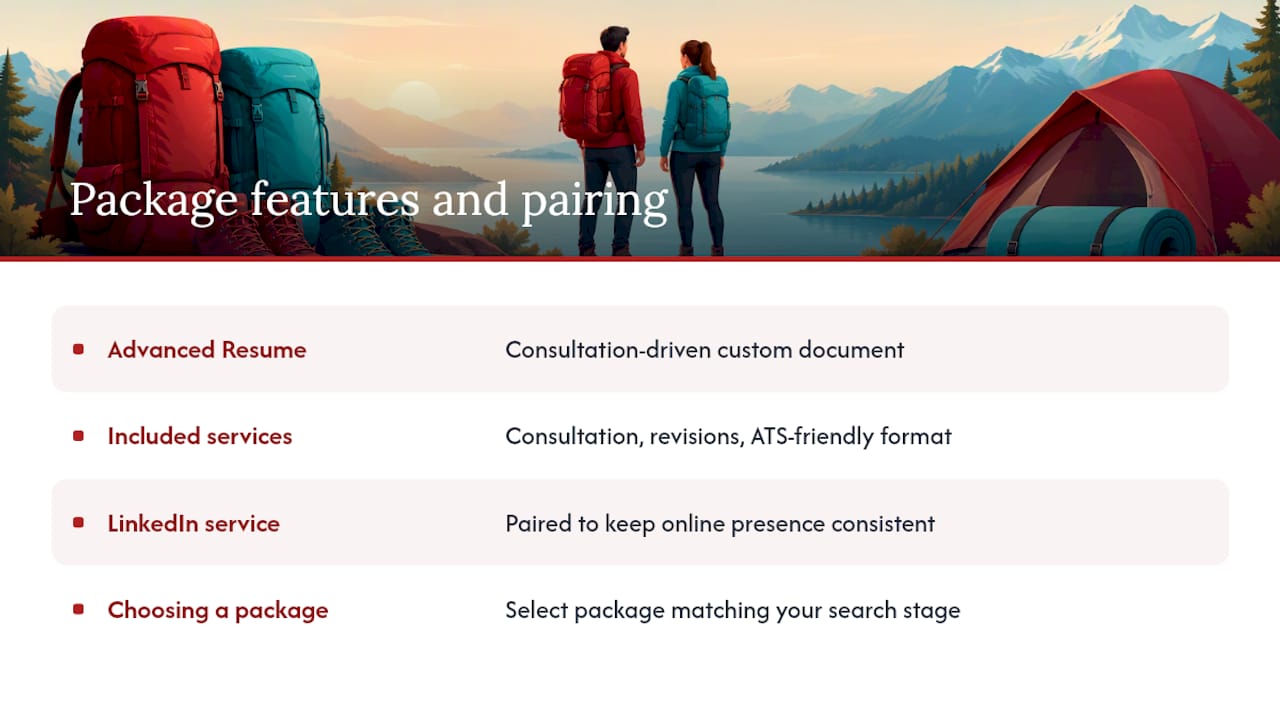
Doing this yourself works for most early and mid-career outreach. It’s worth paying for professional help when you’re targeting a senior executive, pivoting into a new industry where your language doesn’t match the role yet, or approaching a contact you can only realistically reach once. Professionalresumes builds custom, consultation-driven documents with multiple revisions and applicant tracking system-friendly formatting, which tightens both your value pitch and your follow-up plan for outreach that actually matters.
Why authenticity beats polish in 2026 hiring
Tailored outreach is scarce, which is exactly what makes it work. Most job seekers still send nothing unsolicited, so a specific, well-researched letter stands out by default. Use AI to draft if you want, but edit until it sounds like you, not a template. Track which targets respond and put more effort where the return is real.
— Professional
Get expert help writing outreach that lands
If you’re approaching a senior contact or pivoting industries, the margin for error in a cold cover letter shrinks fast, and a generic template won’t carry that weight. The Advanced Resume package from Professionalresumes gives you a consultation-driven, custom-written document built around your actual target roles, not a recycled draft. Every project includes direct consultation, multiple revisions, and applicant tracking system-friendly formatting, so your outreach and your resume tell the same tightened story. If your outreach references an online presence, pair it with the LinkedIn profile optimization service so a curious hiring manager finds a consistent picture the moment they search your name. Compare document levels on the full shop page and start with whichever package matches how far along your search actually is.
Sources
For more on cover letter trends, authenticity in AI-era hiring, and application packaging, see Business Insider and the Our Languages blog.
- Do cover letters still matter? (Business Insider, 2026)
- Do Cover Letters Still Matter in 2026? | LastRound AI
- Letter of interest: definition, tips and examples | Indeed
- Advice on cold emails and approaches (Guerzhoy, University of Toronto)
FAQ
Are cover letters outdated in 2026?
No. Experts remain split, but the consensus leans toward cover letters still mattering precisely because so few applicants send them. A tailored one, especially an unsolicited job application to a company you actually want, still stands out against a sea of resume-only submissions.
How do I write a cold email for a job?
Open with a one-sentence hook tied to a real company need, follow with two or three lines of value backed by one verifiable example, and close with a single low-friction ask like a 15-minute call. Keep the message short and personalize the subject line.
What are five common cover letter mistakes?
The biggest ones are obviously AI-generated phrasing with no personal detail, vague achievements instead of one verifiable example, misspelled names or titles, letters that run too long for a quick skim, and going silent after a single attempt instead of following up once.
Can I use ChatGPT to write a cover letter?
You can use it to draft, but recruiters increasingly report noticing AI-polished applications and growing wary of them. Edit any AI draft heavily to add specific, personal, verifiable details before you send it.