
Hiring teams want impact, not duties: an interview-ready resume is one page, ATS-safe, and built around one to three projects with measurable outcomes. Draft two impact bullets for your strongest project right now, using the XYZ formula (accomplished X, measured by Y, by doing Z). That single exercise, grounded in the competencies Job Bank lists for data analyst roles and in Professional Resumes’ consultative approach, will tell you more about your resume’s gaps than another hour of formatting.
TL;DR:
- Focus on 1 to 3 impactful projects highlighting specific results achieved with measurable outcomes using the XYZ formula.
- Tailor keywords and tools in your resume to match each job posting’s top requirements, emphasizing relevant experience and skills.
- Ensure your resume format is ATS-compatible by avoiding graphics, tables, and headers in favor of a single-column, plain-text layout in DOCX or text-based PDF.
- Present experience in outcome-driven bullets that specify tools used, actions taken, and results, especially for early-career candidates emphasizing project achievements.
- Use clear, concrete metrics and results to demonstrate judgment and impact, rather than listing duties or responsibilities to enhance recruiter interest.
Table of Contents
- What to include on a data analyst resume
- Writing project and portfolio entries that prove competence
- Mapping your resume to the job description
- ATS and formatting rules that keep your resume parsing cleanly
- Sample bullets and a one-page resume skeleton you can adapt
- Common mistakes and quick fixes
- Publisher perspective: how Professional Resumes approaches data analyst resumes
- What actually moves the needle on a data analyst resume
- Turn your resume into interview requests with Professional Resumes
- FAQ
- Sources
What to include on a data analyst resume
A data analyst resume earns attention in five sections, each doing a distinct job for the reader and for the applicant tracking system scanning it first.
The summary sits at the top and does the heaviest lifting in the fewest words. In two to three lines, it should name your title, your core technical stack, and the business value you bring. A line such as “Data analyst with three years in SQL, Python, and Tableau, specializing in turning retail transaction data into inventory decisions that cut waste” tells a recruiter what you do and why it matters before they read another word. For more on phrasing this section, see our guide to writing a career summary that impresses recruiters.
Skills deserve their own section, split into three groups so a scanning eye and an ATS parser both register relevance instantly:
- Technical skills: SQL, Python or R, Excel, Tableau or Power BI, and any data warehouse tools you’ve used.
- Analytical skills: statistical analysis, A/B testing, forecasting, data modelling.
- Soft skills: stakeholder communication, cross-functional collaboration, data storytelling.
Place this block near the top, directly under the summary, where both a human reader and a parser will find it without scrolling.
Experience comes next, written in reverse-chronological order. The mistake most candidates make here is listing responsibilities instead of results. A data analyst’s experience section should show what changed because of the work: reporting time shortened, forecast accuracy improved, a dashboard adopted by three departments. Include the scale of stakeholder engagement too: did you present to a team lead, or did your analysis inform a decision a vice president signed off on? That detail tells a hiring manager how much responsibility you’ve already carried.
Projects belong above work experience for anyone early in their career, or in their own dedicated section for anyone with limited paid analyst experience. Each project entry should carry a title, your role, a rough timeframe, the tools used, and two to three outcome-focused bullets, exactly like a job entry. Hays Canada specifically recommends highlighting project work and naming the data tools involved rather than describing tasks in general terms.
Education and certifications close the resume, kept to a few lines unless you’re early in your career or hold a credential directly tied to the role (a Google Data Analytics Certificate, a SQL certification, a statistics minor). When education is your strongest asset, move it higher and expand it slightly; otherwise, it stays brief at the bottom.
Writing project and portfolio entries that prove competence
Treat every project the way you’d treat a job: give it a title, state your role, add a timeframe, list the tools, and write two to three bullets that show outcome rather than activity. This is where most data analyst resumes lose their edge, because candidates describe what the project involved instead of what it proved.
The XYZ formula fixes that. State what you accomplished (X), how you measured it (Y), and what you did to achieve it (Z). A few before-and-after examples show the shift:
- Before: “Analyzed customer churn data using Python.” After: “Identified the three strongest churn predictors by building a logistic regression model in Python on 18 months of customer data, giving the retention team a prioritized list of at-risk accounts.”
- Before: “Built dashboards in Tableau for the sales team.” After: “Built a Tableau dashboard that consolidated five regional sales reports into one view, cutting the sales team’s weekly reporting prep from half a day to under an hour.”
- Before: “Cleaned and organized a large dataset.” After: “Standardized a 50,000-row dataset with inconsistent date formats and duplicate entries, enabling accurate quarter-over-quarter trend analysis for the first time.”
Each “after” bullet names a tool, a method, and a result a hiring manager can picture.
Choose projects built on messy, real-world data over clean textbook datasets wherever you can. A project that required you to handle missing values, reconcile two inconsistent systems, or make a judgment call about outliers demonstrates the kind of thinking employers actually pay for. A Kaggle competition with a tidy CSV rarely does that, however polished the final chart looks.
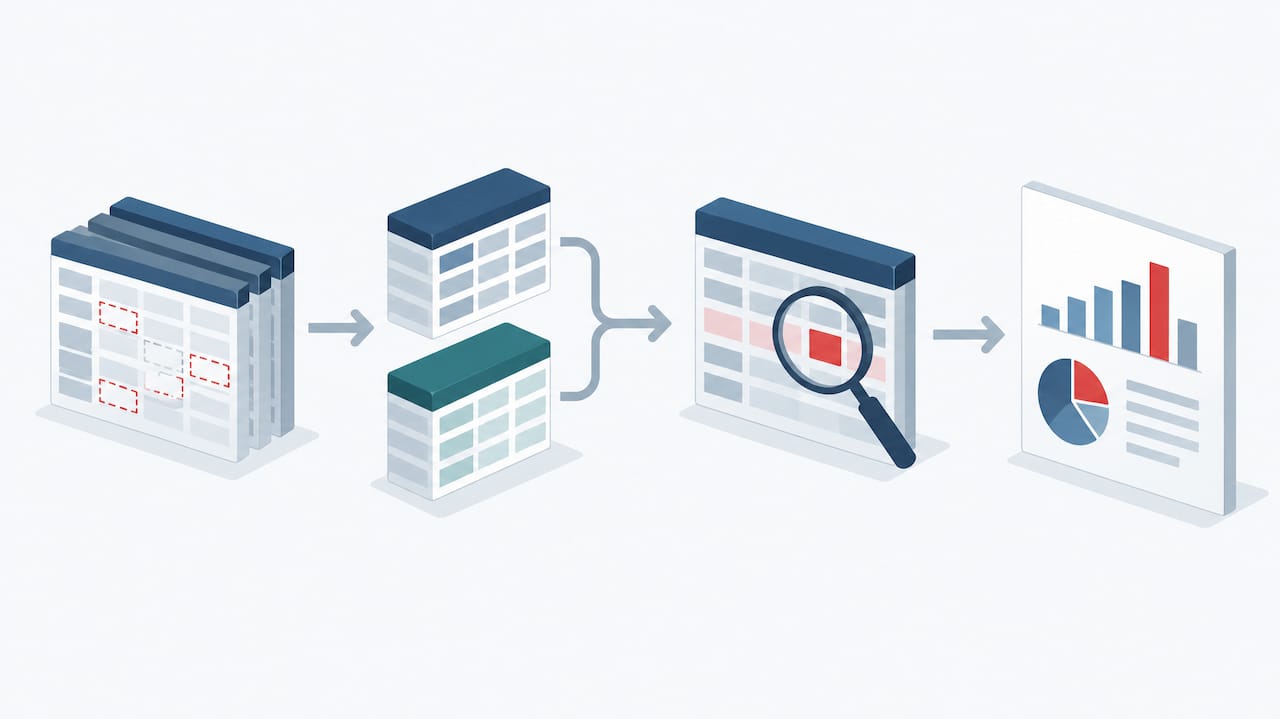
Pro Tip: Pick the one project where you had to make a real decision under uncertainty, not just run a model. That’s the story a hiring manager remembers.
Surface your best work with links to GitHub or a live Tableau Public dashboard, placed under your name or within the relevant project entry. Keep the repository itself recruiter-ready: a clear README explaining the business question, the data source, your approach, and the result, written in plain language rather than code comments. A reviewer who can understand your project in ninety seconds is far more likely to call you than one who has to dig through your scripts to find the point.
Mapping your resume to the job description
Every job posting is a keyword map if you read it that way. Required skills usually appear in the first few bullet points of the “qualifications” section and repeat across multiple postings for similar roles; nice-to-have skills tend to appear once, often softened with language like “familiarity with” or “a plus.” Sort the posting’s language into those two buckets before you touch your resume.
Once you know the priority terms, place them deliberately rather than everywhere:
- Put the one or two highest-priority tools or methods in your summary line.
- List every specific tool named in the posting in your skills section, matching the posting’s exact terminology (SQL, not “database query language”).
- Work the top keywords into your experience and project bullets naturally, attached to a real outcome rather than dropped in as a list.
The right keyword bundle shifts with seniority. A junior analyst posting often emphasizes SQL, Excel, basic statistics, and attention to detail. A mid-level posting adds Python or R, A/B testing, and dashboard tools like Tableau or Power BI. A senior posting layers in predictive modelling, stakeholder management, and sometimes a specific data warehouse platform like Snowflake or BigQuery. Matching your resume’s language to the right tier matters as much as having the skills themselves.
Keyword stuffing still backfires, even against an ATS, because most modern systems weigh keywords in context rather than counting repetitions. A skills section packed with forty tools you’ve touched once reads as noise to both the software and the recruiter who eventually opens the file. Name what you can speak to in an interview, and let the keywords live inside sentences that also tell a story.
ATS and formatting rules that keep your resume parsing cleanly
Formatting mistakes quietly disqualify strong candidates before a human ever sees their resume, because the applicant tracking system misreads the file before it reaches a desk.
Save your resume as a DOCX or a text-based PDF, never an image-based PDF or a design file exported as a flattened graphic. Most ATS platforms read DOCX most reliably, so when a posting doesn’t specify a format, DOCX is the safer default; a clean, text-based PDF works as the backup you send directly to a hiring manager.
Layout rules matter as much as file type:
- Use a single-column layout; two-column resumes often get scrambled when the ATS reads across rows instead of down columns.
- Stick to standard section headings (“Experience,” “Skills,” “Education”) rather than creative labels the parser won’t recognize.
- Keep your name and contact details in the body of the document, never in a header or footer, because many parsers skip those fields entirely.
Parsing traps hide in details that look harmless on screen. Tables, text boxes, icons used in place of words, and graphics representing skill levels (a row of dots or a bar chart) often confuse ATS software or get dropped entirely, taking your contact information or job titles with them. Our guide to ATS-friendly resumes covers these traps in more detail for anyone building a resume from scratch.
A quick, free check matters more than most formatting advice: paste your exported resume into a plain-text file and confirm that your name, contact information, job titles, and dates all survive intact; if something shuffles or disappears, your layout is the cause.
One page remains the standard for anyone with under ten years of analyst experience; two pages become acceptable once you’re managing a team, leading cross-functional projects, or your role has grown senior enough that trimming further would cut real substance rather than filler.
Sample bullets and a one-page resume skeleton you can adapt
Seeing the difference between a duty and an outcome is easier with side-by-side examples, grouped by career stage so you can match your own experience level.
- Entry-level: “Automated a weekly sales report in Excel using VLOOKUP and pivot tables, reducing manual preparation time by roughly half.”
- Mid-level: “Built a customer segmentation model in Python using k-means clustering, giving the marketing team three distinct audience groups that improved campaign open rates in A/B tests.”
- Senior: “Led a cross-functional initiative to consolidate four regional reporting systems into one Power BI dashboard, cutting executive reporting turnaround from five days to one.”
Each example names a tool, an action, and a result, in that order, which is the shape every strong bullet should follow.
A one-page skeleton keeps the proportions right:
- Header (2 to 3 lines): name, phone, e-mail, LinkedIn, portfolio or GitHub link.
- Summary (2 to 3 lines): title, stack, value.
- Skills (3 to 5 lines): technical, analytical, soft skills grouped.
- Experience (12 to 16 lines): two to three roles, two to three bullets each.
- Projects (6 to 10 lines): one to three entries, two to three bullets each.
- Education (2 to 4 lines): degree, institution, relevant certifications.
If a current employer’s numbers are confidential, anonymize them without losing the impact: swap an exact dollar figure for a percentage, and state the baseline clearly, as in “reduced monthly reporting time by roughly a third versus the previous manual process.” The percentage carries the same weight as the raw figure without disclosing anything proprietary.
A short list of phrasing swaps turns most duty-based bullets into outcome-based ones almost mechanically: “responsible for reporting” becomes “delivered weekly reports that informed inventory decisions”; “worked with stakeholders” becomes “presented findings to the operations team, leading to a change in reorder thresholds”; “used SQL to query data” becomes “wrote SQL queries that identified a data entry error costing the team two hours of rework per week.” The pattern is always the same: name the tool, name the action, name what changed.
Common mistakes and quick fixes
Most data analyst resumes fail for a handful of repeat reasons, each fixable in under an hour.
- Vague duty lists (“responsible for data analysis and reporting”) read as filler; rewrite each one using the XYZ formula so it names a tool, an action, and a result.
- Design flourishes like graphics, icons, and two-column layouts often break ATS parsing; strip them out in favour of a single-column, text-based layout.
- Missing metrics on projects and experience bullets leave a hiring manager guessing at your impact; add a number, a percentage, or a before-and-after comparison wherever you can.
- Typos and inconsistent formatting (mixed date formats, uneven bullet punctuation) signal carelessness in a role where attention to detail is the job itself.
Before sending anything, read your resume once purely for ATS-breaking elements, then once for recruiter judgment: does each bullet show a result a stranger would understand in five seconds? Trim any line that doesn’t answer “so what,” and expand any project or role that’s doing real work but currently gets one thin sentence.
Pro Tip: Read your resume out loud. Any bullet that sounds like a job description rather than an accomplishment needs a rewrite.
Publisher perspective: how Professional Resumes approaches data analyst resumes
Each data analyst resume should be built through direct consultation rather than a template swap, matching the document to the candidate’s actual projects and the industry trends shaping the roles they’re targeting. A consultative process, paired with multiple rounds of revision, is designed to surface the kind of project detail and measurable outcome that a rushed self-written resume often leaves out.
Not every candidate needs that level of support. Someone comfortable rewriting their own bullets with the XYZ formula and confident in their formatting can often get a strong resume to a good place alone. The calculation changes for candidates switching industries, returning to the workforce after a gap, or applying to roles where the competition is deep enough that small phrasing and structure differences decide who gets a callback. In those cases, a second set of eyes trained on what hiring managers actually respond to tends to close gaps a candidate can’t see in their own work.
What actually moves the needle on a data analyst resume
Most resume advice overweights formatting polish and underweights proof. A resume with a clean template and vague bullets loses to a plainly formatted resume with two sharp, metric-backed projects almost every time, because hiring managers are screening for evidence of judgment, not design sense.
The XYZ formula gets recommended often, but its real value isn’t the structure, it’s the discipline it forces: you can’t finish the sentence without a number or a concrete result, which means a candidate who can’t fill in “Y” hasn’t actually measured their own work yet. That’s a more useful discovery than any formatting tip.
If you take one thing from this guide, make it this: pick your best project, not your longest list of tools, and tell its story with a number attached. Everything else on the resume, the summary, the skills section, the layout, exists to support that one strong proof point, not to replace it.
— Professional
Turn your resume into interview requests with Professional Resumes
A resume built on project proof still needs the formatting, phrasing, and positioning that get past the first screen, and that’s the gap Professional Resumes closes through a consultation-driven process rather than a generic template. The Advanced Resume package fits analysts with a few years of experience who need their project and work history reframed around measurable outcomes, while the Executive Resume is built for analysts moving into leadership roles where stakeholder scope and business impact carry more weight than tool lists.
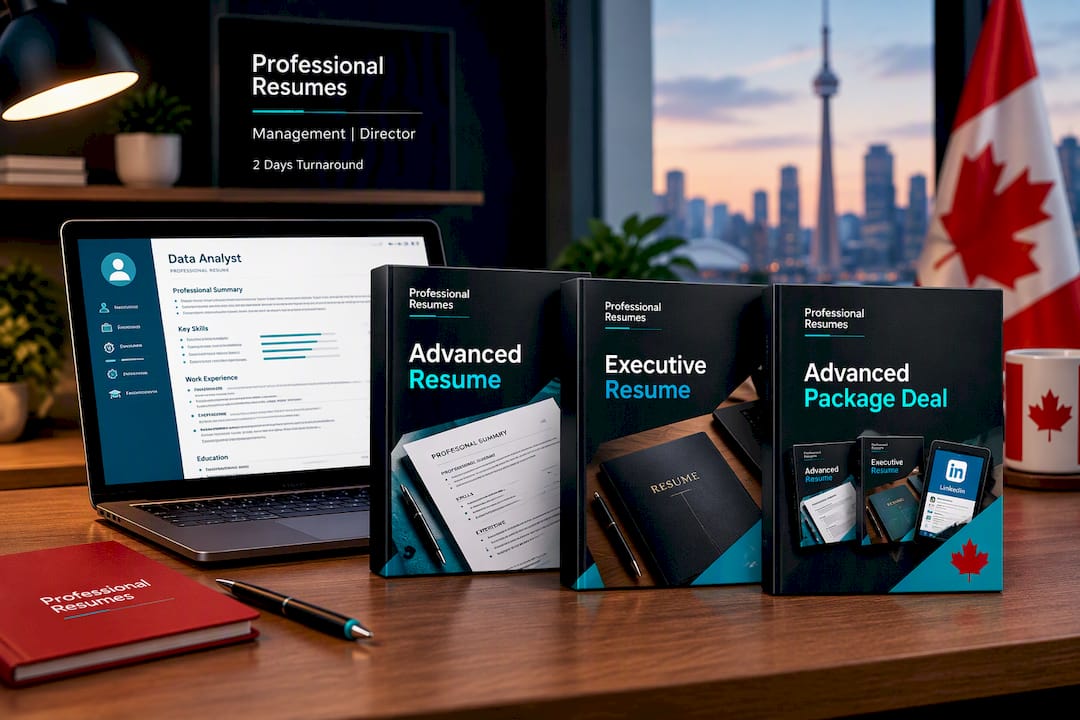
For anyone who wants both a resume and a LinkedIn profile tightened at once, the Advanced Package Deal bundles the two, extending the same project-focused, ATS-aware approach across both documents. Every package includes direct consultation with your writer and multiple rounds of revision, so the final draft reflects your actual work rather than a generic template filled with your name. Browse the full lineup, including the Early Career Resume and Next Step Resume, or book a consultation to start turning your project history into interview requests.
FAQ
How do I write a good data analyst resume?
Lead with a short summary naming your stack and value, back it with a skills section split into technical, analytical, and soft skills, and anchor your experience and projects section in measurable outcomes rather than task lists. Keep the layout single-column and ATS-safe, and link to a GitHub or Tableau portfolio where a hiring manager can see your work directly.
What are the top three skills for a data analyst?
SQL, data visualization (Tableau or Power BI), and statistical or analytical thinking consistently top the skills employers expect, alongside the broader competencies Job Bank lists for the role, including digital literacy, critical thinking, and systems analysis. Communication and data storytelling matter just as much once you’re explaining findings to non-technical stakeholders.
Will AI tools for data analysis replace a data analyst?
AI tools are changing parts of the job, particularly routine cleaning and basic reporting, but the judgment required to frame a business question, choose the right analysis, and communicate results to stakeholders still remains a human skill. Analysts who show they can use AI tools to work faster, rather than resumes that ignore the shift entirely, tend to read as more current to hiring managers.
How do I put data analysis skills on a resume?
List specific tools and methods, SQL, Python, Excel, A/B testing, rather than the generic phrase “data analysis,” and show each one in action inside a project or experience bullet with a measurable result. Grouping skills into technical, analytical, and soft categories also helps both a recruiter and an ATS find them quickly.
Sources
- Database Analyst in Canada | Skills – Job Bank
- Top tips for crafting a data analyst resume | Hays Canada