

A board resume is a strategic biography, not an operational CV. It signals governance judgment, committee readiness, and fiduciary discernment rather than P&L wins. The single highest-impact edit: open with a board-focused summary, then list board and advisory service before executive history, so a nominating chair sees governance fit in the first ten seconds.
TL;DR:
- Emphasize governance experience over operational roles by listing board service first, highlighting specific committee roles, and using governance language in all bullets.
- Keep the résumé within one page, with board and advisory service at the top, and focus on skills, credentials, and evidence of fiduciary and risk oversight.
- Reframe operational achievements into advising or oversight language, especially around risk, succession, and ESG, to better fit board expectations.
- Highlight diversity and governance credentials strategically, tying them directly to oversight value, and include endorsements from recognized governance figures.
- Maintain strict confidentiality, avoid excessive detail, and tailor each résumé version to targeted committees or skill gaps to maximize impact.
Table of Contents
- Crafting a professional summary that positions you for a board seat
- Order and structure: presenting board service before executive history
- What boards look for: skills, committee experience, and proof you can govern
- Governance education and certifications: showing board-readiness
- Sample summary lines and board-service bullets you can adapt
- Common mistakes and a quick readiness checklist
- When professional help speeds up board readiness
- Highlighting diversity attributes that add value to a board
- Showing fiduciary responsibility and risk oversight experience
- Including recommendations and endorsements relevant to board roles
- Addressing gaps in board experience or transitioning from operations
- Confidentiality and discretion in board resumes
- A short note on the operator to director mindset
- How one professional service builds board-ready documents
- Sources
Crafting a professional summary that positions you for a board seat
Search firms and nominating chairs typically scan a résumé for fifteen seconds before deciding whether to keep reading. Your summary either earns the next look or costs you the interview, which is why it has to work harder than any paragraph in your executive résumé ever did.
A board-ready summary answers three questions immediately: what governance value do you bring, which committee(s) can you serve on today, and what sector or credential backs that up. It reads in third person or neutral voice, avoids “I,” and states scope rather than duties.
A workable structure looks like this: [Governance identity] with [X years] in [sector], bringing expertise in [core competency] and [core competency]. Serves on the [type] board committee, contributing [specific value].
- State organization type and scale (public company, private equity backed, $500 million revenue) rather than your job title’s full duty list.
- Name one or two committees you’re qualified for, not every function you’ve ever touched.
- Cut anything that reads as operational: “managed a team of 200” belongs on an executive résumé, not here.
- Keep it to two to four lines, full stop.
Pro Tip: Write the summary last. Draft your board-service bullets and governance achievements first, then pull the strongest thread of value into a two-line opening. Trying to write the summary cold almost always produces vague filler.
The NACD’s guidance on building a board résumé frames this correctly: the résumé is read as a strategic biography, and the summary is where that framing either lands or fails.
Order and structure: presenting board service before executive history
Nominating committee members and retained search consultants often read board résumés out of order on purpose. They jump straight to governance experience because that’s the qualifying signal, and if it’s buried on page two under fifteen years of operating roles, they may never get there.
That’s the case for restructuring the whole document:
- Name, contact, and summary at the top, unchanged from any strong résumé.
- Board and advisory service, listed immediately after the summary: organization name and type (public, private, nonprofit), your role, years served (not months), committee assignments, and one governance-oriented bullet per entry.
- Executive history, condensed to titles, companies, and dates, with one or two lines per role focused on scope and outcomes rather than day-to-day duties.
- Education and governance credentials, followed by any appendix material.
If you have an extensive publication list, speaking history, or academic credentials, move that to a one-page addendum rather than letting it crowd the main document. The AICD’s guidance on creating the perfect CV is explicit on this point: keep the core résumé to one page where possible, two at most, with board and committee service listed first so it can be scanned in seconds.
What boards look for: skills, committee experience, and proof you can govern
Boards recruit for a specific set of competencies, and your résumé needs to map to them directly rather than implying them through job titles. The NACD identifies financial literacy, risk oversight, strategic planning, succession planning, and committee experience as the recurring priorities, with nonprofit boards also weighing fundraising capacity and community engagement.
Committee fit matters as much as general governance credibility. Audit committees want financial statement literacy and internal controls exposure. Compensation committees want experience designing incentive structures at scale. Governance and nominating committees want succession planning and board evaluation experience. Risk committees increasingly want cybersecurity or ESG familiarity layered on top of traditional risk oversight.
Translate operational history into governance language:
- Instead of “led enterprise risk function,” write “advised the audit committee on enterprise risk framework redesign.”
- Instead of “oversaw succession planning for VP roles,” write “guided board-level CEO succession planning and evaluation criteria.”
- Instead of “built the ESG program,” write “provided strategic input on ESG disclosure and stakeholder risk exposure.”
The verb shift, from doing to advising, is the entire exercise.
Governance education and certifications: showing board-readiness
Formal governance credentials are one of the fastest ways to signal seriousness to a nominating committee that doesn’t know you personally. A designation like ICD.D in Canada or completion of NACD director education tells a chair you’ve studied board dynamics, not just assumed you understand them from the C-suite side of the table.
Where to place it depends on how central it is to your candidacy:
- If it’s your strongest credential, work it into the summary line directly (“ICD.D-certified director with 20 years in financial services”).
- Otherwise, give it its own line under a “Governance Credentials” or “Certifications” heading near education.
- A short “Governance Training” subsection works well if you’ve completed multiple programs worth listing together.
If you lack formal certification, don’t leave the space blank. Volunteer board service, committee internships with nonprofit organizations, or targeted executive education in governance topics are legitimate substitutes. The NACD notes that pairing governance training with even unpaid board experience is a credible path for first-time directors, and search firms understand that everyone’s first board seat has to come from somewhere.
Sample summary lines and board-service bullets you can adapt
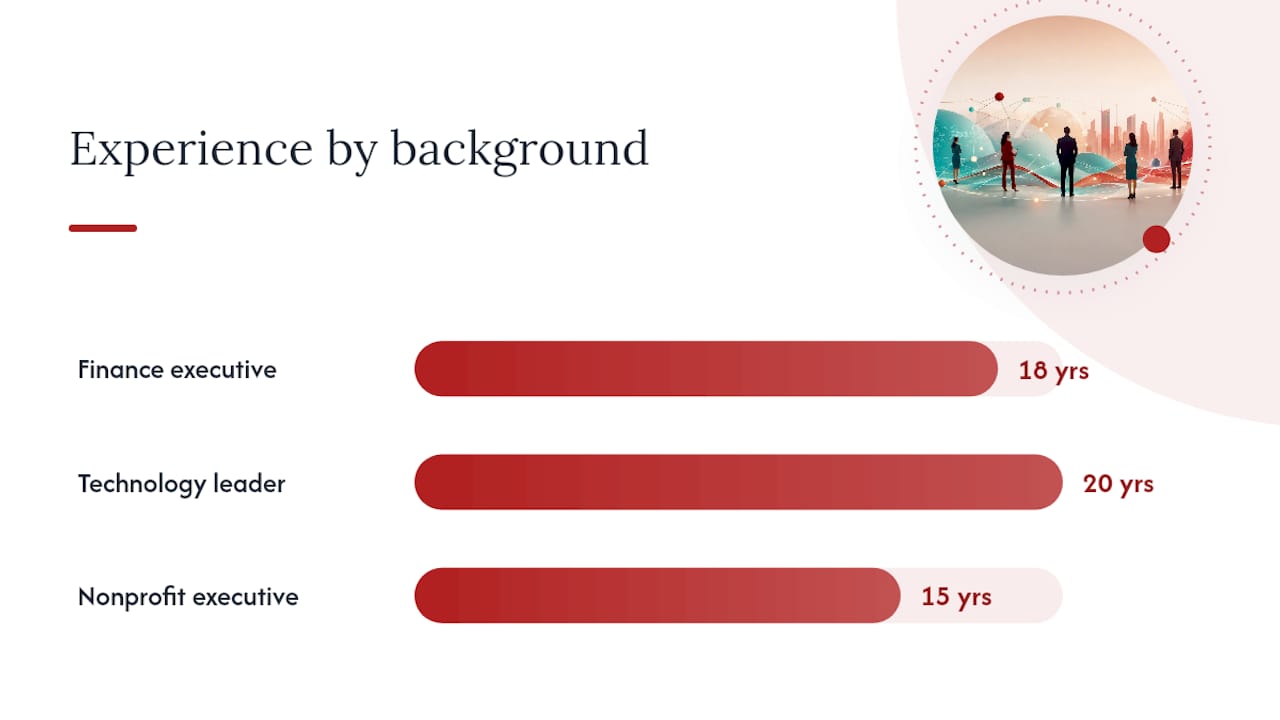
A résumé built on the right structure can still fail on wording. Governance language is a specific register, and most executives default back to operational phrasing without noticing.
Three summary lines to adapt by background:
- Finance: “Finance executive with 18 years in capital markets, bringing audit committee expertise and deep familiarity with SEC reporting and internal controls.”
- Technology: “Technology leader with two decades scaling SaaS platforms, offering board-level insight on cybersecurity risk, digital transformation, and product governance.”
- Nonprofit: “Nonprofit executive with 15 years in community health, contributing fundraising strategy and stakeholder governance experience to mission-driven boards.”
Board-service bullets that show oversight rather than operation:
- “Provided oversight during a cross-border acquisition, evaluating integration risk and reporting findings to the full board.”
- “Chaired the compensation committee’s review of executive incentive structure, aligning pay with long-term shareholder value.”
- “Advised on a divestiture that protected shareholder value amid a contracting market segment,” which is the kind of high-level framing Robert Half recommends over granular operational metrics.
Aim for a résumé length around one page, with a slightly longer document acceptable for candidates with extensive multi-board histories. Use a clean, single-column layout with generous white space; a governance résumé crowded with small type undercuts the very discretion it’s meant to project.
Common mistakes and a quick readiness checklist
The most frequent error is repurposing an executive résumé wholesale and calling it a board document. Operational verbs (“managed,” “directed,” “built”) signal you’re still thinking like an operator, not a director. A close second: résumés that run three or four pages because every job function from the last twenty years made the cut.
Before sending your résumé to a nominating committee, confirm:
- Board and committee service appears before executive history, not after.
- Every bullet uses governance language: oversaw, advised, guided, evaluated.
- Length sits at one page, two at the absolute maximum.
- Dates use years only, never months.
- LinkedIn matches the résumé’s framing exactly, headline included.
Pro Tip: Keep two or three versions of your summary paragraph on file, each weighted toward a different committee strength (audit, risk, ESG). Swap in the version that matches the specific board’s stated gap before you submit.
When professional help speeds up board readiness
Some candidates can make this shift alone. Many can’t, particularly executives with no formal board seat yet who need help translating a strong operating record into governance language a nominating committee will recognize on sight.
Signs it’s worth bringing in expert help: you have zero board experience to draw from, you’re struggling to reframe your career narrative, or you’re facing a submission deadline with no time to iterate. A resume writer working specifically on board documents should deliver a tailored board summary, committee-focused bullets, a LinkedIn profile aligned to the same messaging, and at least one round of revisions once you see how it reads.
Highlighting diversity attributes that add value to a board
Boards increasingly evaluate candidates against gaps in perspective, not just gaps in skill. If you bring a different professional path, geography, gender, ethnicity, age cohort, or lived experience than the board’s current composition, that’s a legitimate credential and belongs in your résumé, not left as an unstated fact about you.
Frame it as a governance contribution rather than a personal detail. Instead of a generic diversity statement, tie the perspective to a specific oversight value: “Brings a consumer-market perspective underrepresented on the current board, informing risk assessment in emerging demographic segments.” That’s concrete enough for a nominating chair to see exactly what gap you close.
This works particularly well for candidates moving from operating roles in sectors the board wants exposure to, immigrants with international market experience the board lacks, or professionals whose functional background (technology, legal, ESG) fills a stated skills gap on the board’s own recruiting brief. If the board has published a skills matrix or stated priorities, mirror that language directly rather than making the committee infer the connection.
Understate rather than overstate. One clear sentence in the summary, reinforced by a bullet or two in your board-service section, carries more weight than a paragraph that reads as a checklist.
Showing fiduciary responsibility and risk oversight experience
Every director carries a fiduciary duty of care and loyalty, and boards want proof you understand what that means in practice, not just in theory. That proof comes from specific language, not a general claim of integrity.
Show fiduciary judgment through examples of independent decision-making: instances where you challenged management’s recommendation, flagged a risk before it became material, or voted against a proposal on governance grounds. These are the moments that separate a genuine director from someone who simply attended meetings.
For risk oversight specifically, reference the categories boards care about most right now: cybersecurity, regulatory compliance, ESG-related liability, and enterprise risk frameworks. A bullet like “Evaluated cybersecurity risk posture ahead of a planned acquisition, informing the board’s go/no-go recommendation” does more work than any general statement about being “risk aware.”
If you’ve served on an audit or risk committee, name it explicitly and describe one substantive contribution rather than listing the committee as a bare credential. Nominating committees read committee names quickly, but they remember specific examples of judgment exercised under real stakes.
Including recommendations and endorsements relevant to board roles
A résumé makes a claim; an endorsement corroborates it. Where you can, use recommendations strategically rather than treating them as an afterthought bolted onto the bottom of the page.
LinkedIn recommendations from board chairs, fellow directors, or senior executives who’ve watched you exercise governance judgment carry more weight than generic praise from a former direct report. Request one or two specifically focused on governance qualities: independent judgment, financial literacy, committee contribution, rather than operational leadership.
A brief reference line naming a sitting board chair or CEO willing to speak to your candidacy, with their permission, can be included discreetly at the bottom of a résumé or in a cover note rather than the résumé body itself. Some candidates prepare a short reference sheet as a separate document, available on request, which keeps the résumé itself clean while still signalling that credible endorsement exists.
Avoid vague testimonial language (“a trusted advisor”) in favour of specific attributions (“recommended by [board chair] for audit committee expertise”), and always confirm permission before naming anyone.
Addressing gaps in board experience or transitioning from operations
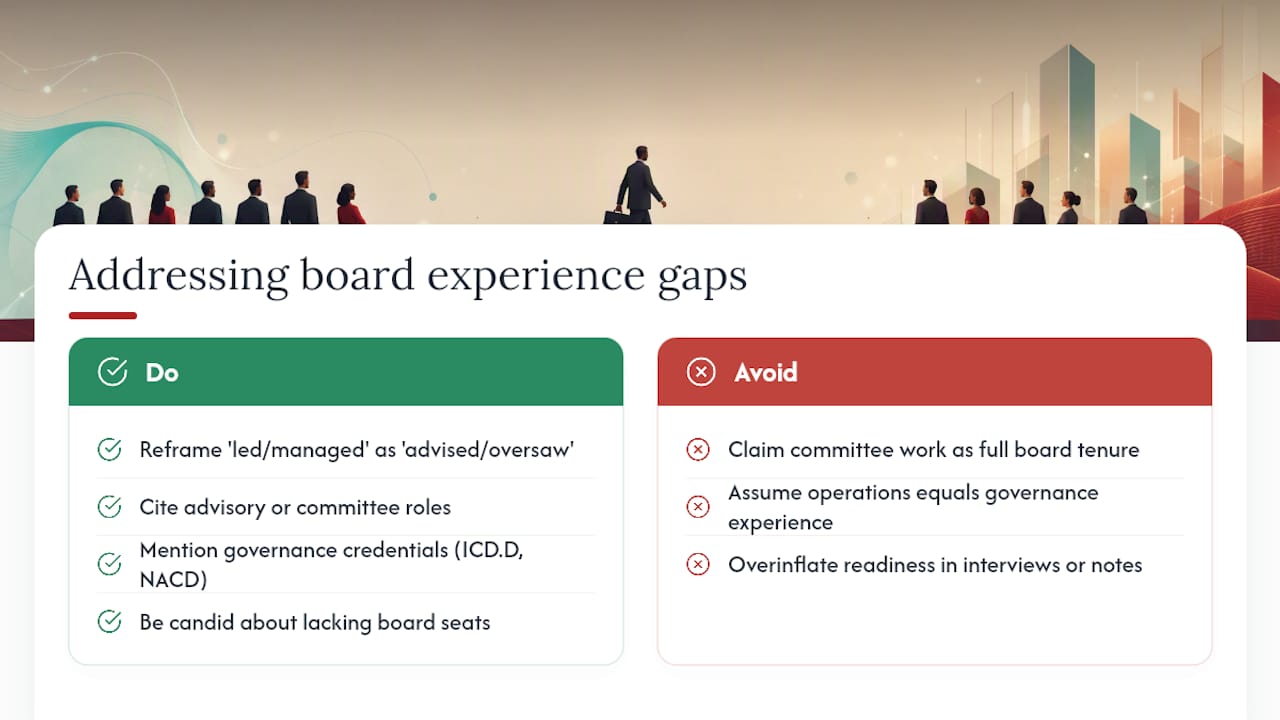
Most first-time board candidates have zero prior board seats, and that gap doesn’t need to be hidden. It needs to be reframed around adjacent evidence: committee-level exposure, advisory board work, or governance training that demonstrates you already think in board terms.
If you’ve never held a formal board seat, lean on advisory roles, nonprofit board service, or committee work within a professional association. These count as legitimate governance experience, particularly when paired with a credential like ICD.D or completed NACD coursework, which signals you’ve deliberately studied the discipline rather than assumed it transfers automatically from operating experience.
For executives transitioning directly from a C-suite role, the challenge is different: you have plenty of leadership experience but it’s phrased entirely in operational terms. The fix is the reframing exercise covered earlier in this piece, converting “led” and “managed” into “advised” and “provided oversight.” A related resource on C-level resume writing covers the mechanics of that translation in more depth for readers still building the underlying document.
Be candid about the gap in your cover note or during interviews rather than overselling committee work as full board tenure. Nominating chairs respect a clear account of readiness far more than an inflated one that unravels under a reference check.
Confidentiality and discretion in board resumes
Board searches run quietly, often through retained search firms who explicitly ask candidates not to distribute their materials broadly. The Women Get on Board FAQ on building a board résumé notes that search firms and chairs favour concise, tailored documents precisely because they’re circulated within a small, controlled group rather than posted publicly.
That discretion should show up in how you handle your own résumé. Avoid naming specific confidential deal details, unreleased financial figures, or proprietary strategic initiatives your current employer hasn’t disclosed publicly. Frame prior board discussions in general governance terms rather than describing specific board debates or votes that were meant to stay in the room.
If you’re currently serving on a board undergoing a sensitive process (a pending merger, a leadership change), it’s reasonable to note your role without detailing the situation itself. A nominating committee reading your résumé understands that discretion around live matters is itself a signal of trustworthiness, not a gap in transparency.
Keep your résumé distribution list tight, and if a search firm is managing your candidacy, let them control where the document goes rather than sending it broadly yourself.
A short note on the operator to director mindset
The hardest part of this exercise isn’t formatting. It’s genuinely believing that oversight, not execution, is now your value. Most executives write their first board resume draft in the voice of the job they’re leaving, not the seat they’re trying to earn.
Try this now: take one bullet from your current résumé and rewrite it using “advised,” “evaluated,” or “provided oversight” instead of “led” or “managed.” Notice how differently it reads.
— Professional
How one professional service builds board-ready documents
Reframing a career narrative from operator to director is exacting work, and most executives are too close to their own history to see where the operational language is still showing through. That’s where a second, trained eye earns its cost back quickly.
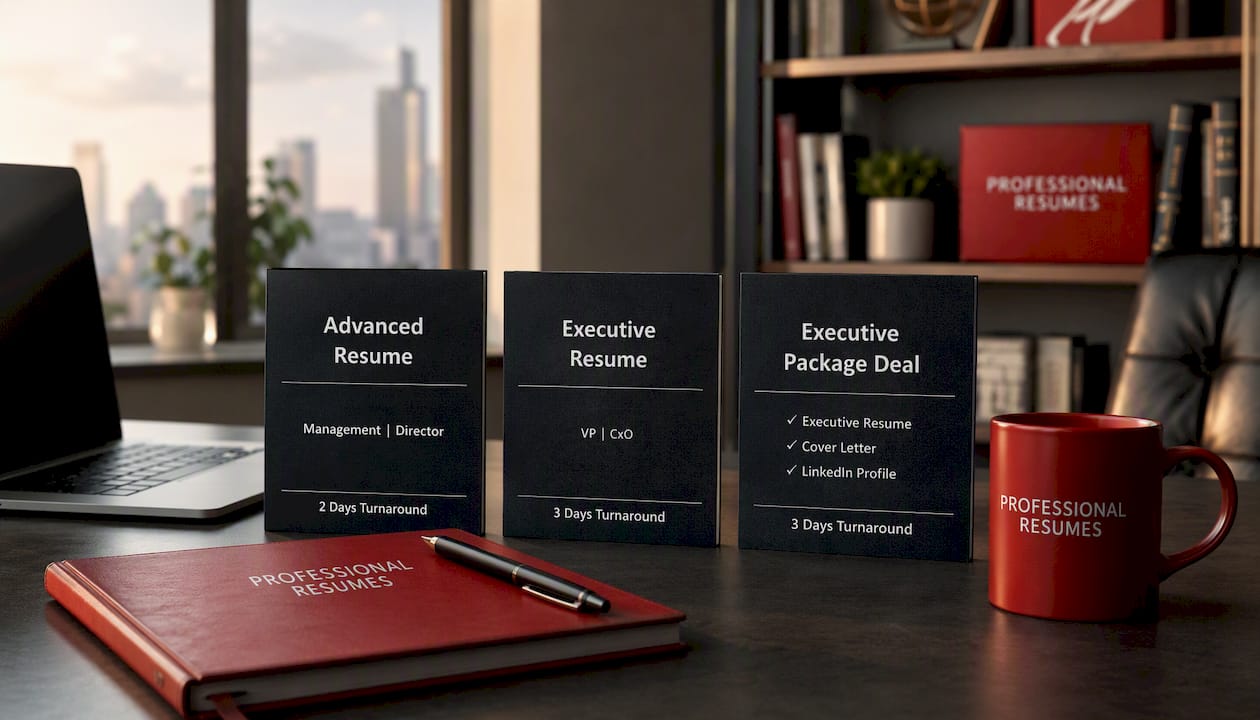
For candidates targeting a specific board seat, the Advanced Resume service builds a tailored summary and committee-focused bullets around the exact governance gap a target board has stated. Senior leaders who need the full executive-to-director translation, not just a targeted rewrite, are better served by the Executive Resume package, which handles the language shift at the level of an entire career history. For executives pursuing board seats while also managing a broader job search, the Executive Package Deal bundles the résumé with a matching cover letter and LinkedIn profile, so every document a search firm or chair reviews tells the same governance story. Each package includes direct consultation with your writer and multiple revision rounds, so the final draft reflects your actual governance voice, not a template. Book a consultation to find out which package fits your timeline.