
Treat a career gap as a formatting decision, not a confession. Lead with a years-only or accomplishment-first layout that keeps recruiter attention on experience, and save any explanation for the cover letter or interview unless an application specifically requires exact dates. A field experiment on resume framing found this approach improves callback rates for candidates with gaps. Follow the employer’s format when one is specified.
TL;DR:
- Using years-only dates and listing gaps as labeled activities helps keep a candidate’s experience the focus and reduces the visibility of employment gaps.
- Leading with a concise career summary that highlights recent accomplishments and relevant skills can divert attention from the break for most recruiters.
- Short gaps under a year often do not require explicit explanation if months are removed; longer gaps benefit from a labeled entry and brief, neutral context.
- Tailoring the resume format to the gap length—chronological for short gaps, hybrid or functional for longer ones—improves readability and perception.
- During interviews and cover letters, candidates should quickly address the gap with a factual reason and immediately shift to recent achievements to demonstrate readiness.
Table of Contents
- Practical resume tactics to reduce the gap’s visibility
- Resume samples and short templates you can copy for common gap lengths
- How to explain the gap in a cover letter and interview
- Formatting for applications that require full timelines
- What the research says about these tactics
- What actually changes when a returning candidate’s resume works
- How Professional Resumes can help you present your timeline
- Where these recommendations come from
- Sources
- FAQ
Practical resume tactics to reduce the gap’s visibility
The goal is to shift a recruiter’s attention from when you worked to what you accomplished. A few structural choices do most of the work.
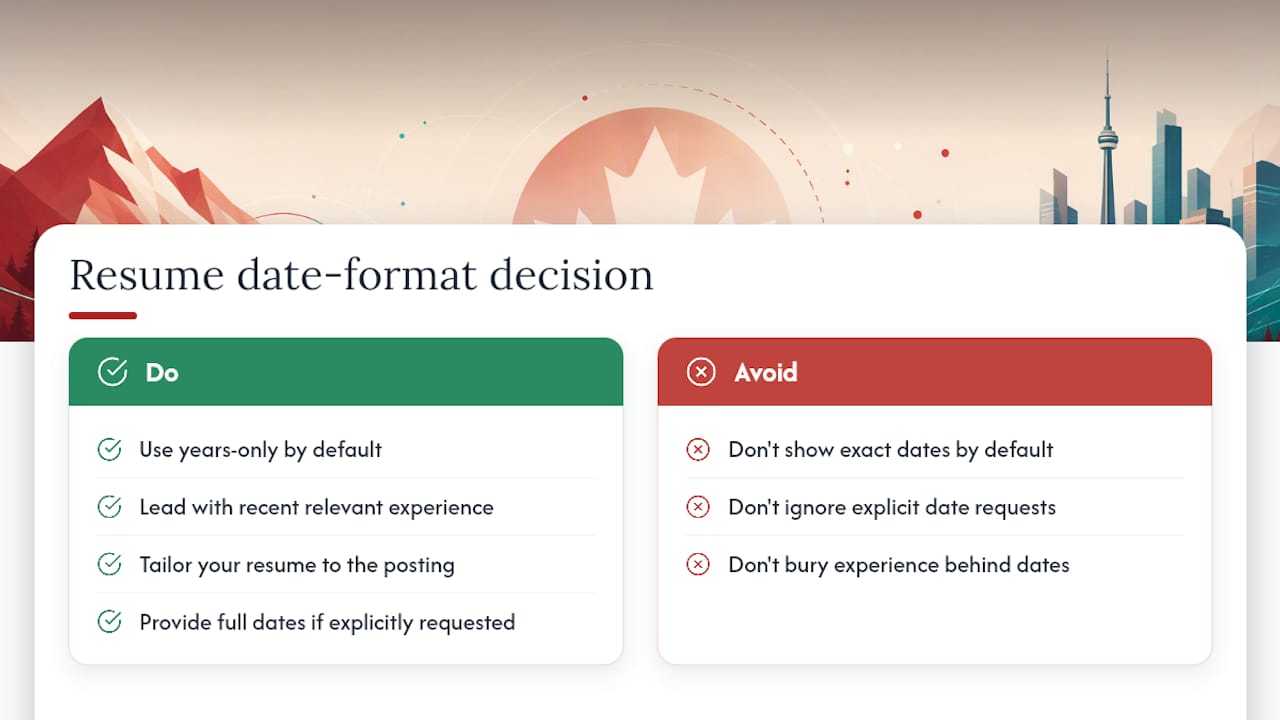
Use years instead of months wherever the application allows it. Listing “2021 to 2024” instead of “March 2021 to January 2024” removes the visual cue that flags a gap, without misrepresenting your history. This only works when the employer has not requested exact dates, so check the posting or portal instructions first.
Open with a career summary that reframes the break. Three or four lines at the top of the resume, written in the present tense, should state your target role, your strongest relevant skill, and one measurable result from your most recent position. This gives a reviewer something concrete before they reach the chronology.
Convert productive time into a labelled entry. If the gap involved study, freelancing, caregiving, or volunteering, give it a title and treat it like any other role: “Independent Consultant,” “Caregiver, Family Support,” or “Professional Development, Project Management Certificate.” Add two or three bullets that describe outcomes, not just activity: budgets managed, courses completed, projects delivered.
Choose your format based on gap length and role type. A gap under a year usually disappears inside a standard chronological resume once months are dropped. A gap of two to five years often reads better in a hybrid format, summary and skills first, chronology second. A gap longer than five years, or several gaps, may call for a functional resume that groups experience by skill area rather than by employer. For more on adapting structure to your situation, this guide to mid-career resume refreshes walks through the trade-offs.
Before sending anything out, run a short pass through what stays, what goes, and what moves:
- Remove months from role dates when the application does not require them.
- Keep any certification, course, or volunteer role that used skills relevant to the target job.
- Move outdated roles or unrelated short-term jobs further down or into a condensed “Earlier Experience” line.
Pro Tip: Read your summary out loud. If it explains your gap instead of selling your skills, rewrite it.
Resume samples and short templates you can copy for common gap lengths
Different gap lengths call for different structures. These examples show the format, not the wording you have to use.
- Six-month gap, standard chronological format. Keep the layout exactly as it would look with no gap at all, dates in years only. Open with a two-line summary: “Marketing coordinator with six years of campaign management experience, including a 40% increase in email engagement at [Company].” No mention of the gap is needed.
- Two-year gap, labelled career break entry. Under your most recent role, add: “Career Break, Family Caregiving, 2022 to 2024. Managed household finances and coordinated medical appointments for a family member; completed an online project management certificate during this period.” Two bullets are enough; three is the ceiling.
- Five-plus year gap, hybrid or skills-led format. Lead with a “Core Skills” section listing four or five capabilities relevant to the target role, followed by a “Selected Achievements” block pulling your best two results from past positions. Chronology moves to the bottom, years only, no elaboration.
Keep summaries under 40 words, bullets under 20, and verb tense consistent: past tense for finished roles, present tense only for the summary line describing who you are now. A career summary guide covers wording choices in more depth if you want to sharpen that opening section further.
How to explain the gap in a cover letter and interview
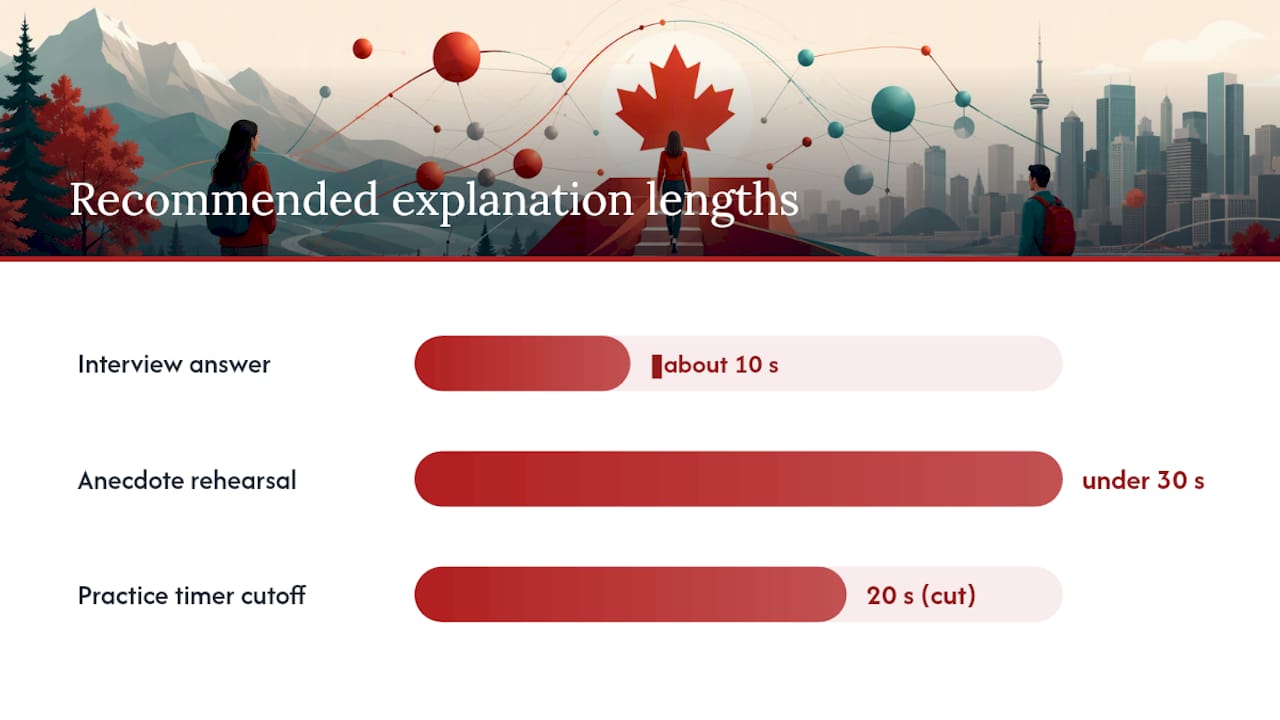
The interview version of your explanation should take about ten seconds to say and end on your readiness, not your circumstances.
- Use a neutral, factual opener: “I took time away from full-time work to [reason]. During that time, I [skill or activity], and I’m ready to bring that back to a full workload.”
- Pivot immediately to a recent accomplishment, even one from the gap itself: a course finished, a volunteer project delivered, a freelance client retained.
- Keep health or caregiving references general: “I stepped away for a family matter” is sufficient; no medical detail is expected or necessary.
Relaunch experts at Stanford Graduate School of Business advise being matter-of-fact about the break and moving quickly to why you’re the right fit, rather than over-explaining. Interviewers are generally checking for readiness and current capability, not looking for a detailed accounting of your time away.
For the cover letter, one short paragraph does the job: acknowledge the gap in a single sentence, then list what you did that keeps you current. “After a two-year career break for caregiving responsibilities, I completed a certificate in supply chain management and volunteered with a local logistics non-profit, both directly relevant to this role.” That’s the full explanation. No apology, no lengthy justification.
Rehearsal matters more than wording. Build two or three short anecdotes from your most recent role and from anything productive you did during the gap, then practise saying them aloud until they take under thirty seconds each. A resource with scripted examples offers additional phrasing if you want more models to adapt.
Pro Tip: Practise your explanation with a timer. If it runs past 20 seconds, cut it in half.
Formatting for applications that require full timelines
Some systems override every tactic above. Government portals, regulated professions, and certain ATS platforms expect complete, verifiable dates, and no formatting trick should override an explicit instruction.
- Follow the application’s own guidance first: Government of Canada resume guidance instructs applicants to tailor each submission and provide full dates when a portal or employer requests them.
- For ATS-heavy applications, keep formatting simple: standard headings, no tables or text boxes, and keywords from the job posting placed in your summary and bullets. This ATS formatting guide covers the layout choices that keep a resume readable by both software and people.
- When dates are mandatory, minimize gap salience with a short labelled explanation rather than leaving a blank line: a one-line “Career Break” entry with dates satisfies the requirement without drawing extra attention.
- For regulated professions or licensing applications asking for a full timeline, list every period in order, including gaps, and use a brief neutral label for each rather than omitting anything.
What the research says about these tactics
A field experiment on resume formatting found that applicants with employment gaps who listed years of experience instead of exact employment dates received more employer callbacks than those using full dates. The format works by making experience the most visible detail on the page, rather than the timing of the gap.
That finding lines up with Government of Canada guidance, which recommends tailoring each resume to the posting and leading with the most recent, most relevant experience, while still supplying full dates whenever an employer or application system specifically asks for them. The practical rule follows from both: default to years-only for visibility, but treat explicit date requests as non-negotiable instructions rather than a formatting preference to override.
What actually changes when a returning candidate’s resume works
Generic templates hurt candidates with gaps because they present every date and every role with the same weight, leaving the gap as the most noticeable thing on the page. A few focused edits change what a recruiter’s eye lands on first: a rewritten summary, two or three achievement bullets pulled to the top, and a years-only date format. None of that requires reworking the whole document.
A quick review checklist covers most of what matters in five to ten minutes: does the summary lead with a result, not a job title; are dates in years unless the application says otherwise; does any gap period have a label and a bullet, not a blank space; are keywords from the target posting present in the top third; is the most relevant experience above older, unrelated roles; and does the whole document fit on one or two pages without crowding.
— Professional
How Professional Resumes can help you present your timeline
Professional Resumes builds resumes around the same principle covered above: experience first, gap second, and only as much explanation as the situation calls for. Which product fits depends on where you are in your career. The Early Career Resume at $139 suits someone re-entering the workforce after an early-career break, while the Advanced Resume at $239 fits a mid-career relaunch with a longer work history to reframe. Job seekers who want both a resume and a LinkedIn profile addressed together can look at the Early Career Package Deal, which bundles those documents for a single re-entry into the market.
Each engagement starts with a consultation to walk through your work history and the gap itself, followed by a draft built around a tailored summary and years-based formatting, then a revision round to sharpen wording and structure. To get the most out of the consultation, come with a rough list of what you did during the gap, whether that was study, freelance work, or caregiving, and a target role or two in mind. The full range of resume packages, including the Next Step Resume and Executive Resume, is available for comparison, and the LinkedIn profile optimization service is worth pairing with any resume order if your profile still reflects your timeline the old way.
Where these recommendations come from
The formatting advice above draws on Government of Canada resume guidance for application and dating requirements, a PMC field experiment on years-based resume formatting and callback rates, and practical scripts from Stanford Graduate School of Business relaunch guidance. Each link above leads to the original source for further reading.
Sources
- Reducing discrimination against job seekers with and without employment gaps (PMC)
- Government of Canada – how to apply / resume guidance
- Explain career gaps and transitions on your resume | Stanford Graduate School of Business
- How to answer ‘tell me about this gap’ on your resume in an interview | CNBC
FAQ
Is a two-year gap bad on a resume?
A two-year gap is common and not inherently damaging when the resume leads with years-based dates and a summary built around recent skills and results. What matters more than the length is whether the document shows what you did during that time and how it connects to the role you want.
How long of a gap is okay on a resume?
There’s no fixed cutoff; a short gap under a year typically needs no mention at all once months are removed from the dates. Longer gaps, several years or more, are best handled with a labelled entry describing relevant activity, paired with a brief, confident explanation kept for the cover letter or interview.
How do I explain a two-year resume gap?
Use a short, factual sentence naming the reason in general terms, then pivot immediately to a recent skill, course, or project that shows you’re current. Career experts note that interviewers are mainly checking for readiness, so a ten-second answer followed by evidence of capability is usually enough.
How can I justify my career gap?
The strongest justification is evidence, not explanation: a certificate finished, a freelance client served, a volunteer project delivered during the gap. Listing that activity as a labelled entry on the resume, with two or three outcome-focused bullets, does more to reassure an employer than any amount of wording in a cover letter.