
In Canada, a curriculum vitae is a long, detailed academic record, while employers outside academia expect a short, tailored resume. If you are applying to a company, a hospital, a bank or most government postings, you almost certainly need a resume, even when the posting says “CV”. If you are applying for a faculty position, a research role, a postdoctoral fellowship or graduate school, you need a CV. This guide explains how to tell the two apart, how each is formatted for Canadian readers, and where applicants coming from other countries most often go wrong.
TL;DR
- Outside academia and research, Canadian employers expect a one- to two-page resume, tailored to the posting, not a multi-page CV.
- A CV is a comprehensive record with no fixed length, used for academic, research and scientific roles and for graduate or professional programs.
- Quebec is the exception in vocabulary: “CV” and “resume” are often used interchangeably there, but the document recruiters expect still resembles a North American resume.
- Leave off photographs, date of birth, marital status and nationality, and use reverse-chronological order unless you have a specific reason not to.
- Federal government applications reward exact alignment with the posting’s criteria, so build that document separately.
Table of Contents
- What “curriculum vitae” means in Canada
- CV or resume in Canada: a side-by-side view
- The Quebec exception
- CV format in Canada: what an academic CV contains
- Resume format in Canada: what employers outside academia expect
- If you are new to Canada
- Federal and public sector applications
- Gaps, record suspensions and other things to address directly
- Our perspective
- How we can help
- A short checklist before you send
- FAQ
- Sources
What “curriculum vitae” means in Canada
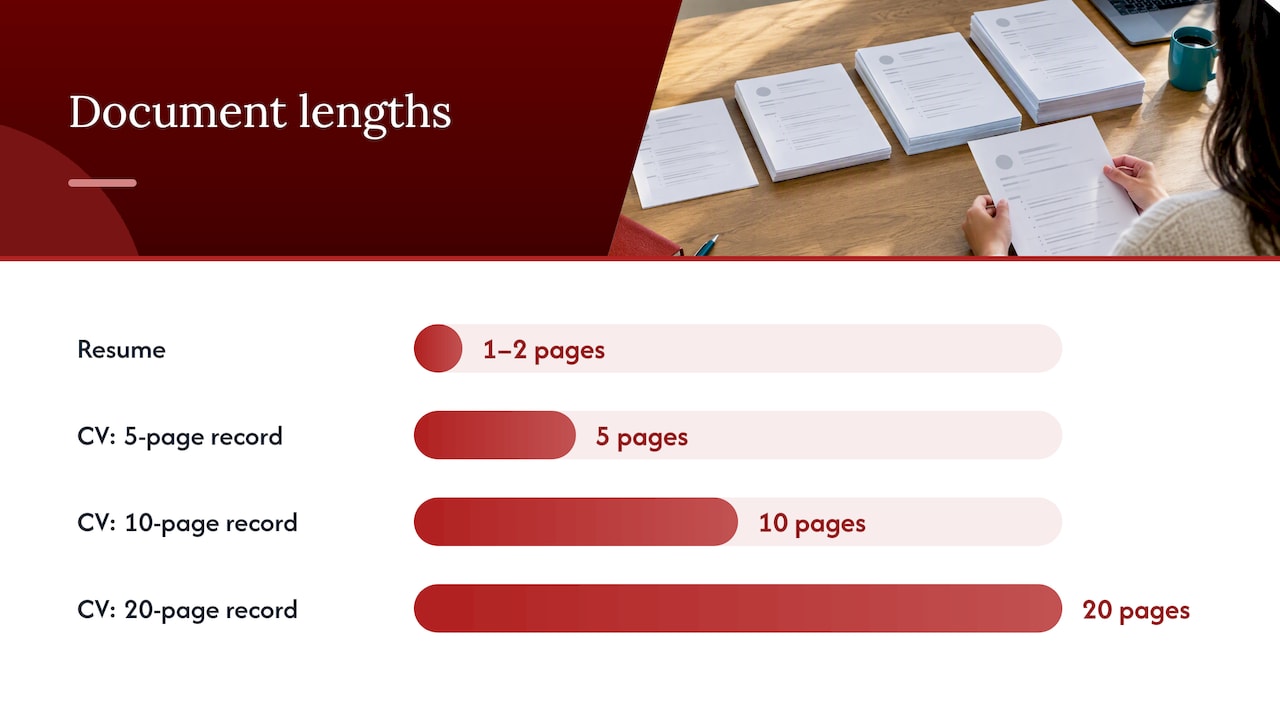
The word is used in two ways, and that is the source of most confusion. In many countries, a CV is simply the standard job application document, one or two pages long. In Canada, the two terms are distinct outside Quebec: a resume is a brief document of one to two pages written for a specific job, and a CV is a detailed record that can run to five, ten or twenty pages depending on a career history.
University career offices say the same thing. Trent University notes that a CV is usually only used for academic positions, research-related positions, or applications to professional and graduate programs. Memorial University’s international office adds that a CV is not used for an industry job search.
The practical rule is simple. Ask what kind of organization is reading the document.
- A company, a clinic, a school board, a municipality, a bank or a federal department: send a resume.
- A university department, a research institute or a scholarship committee: send a CV.
- A posting that says “CV” without context: look at the employer. If it is not a post-secondary or research institution, clarify the expectation with the recruiter or default to a resume.
CV or resume in Canada: a side-by-side view
| Feature | Canadian resume | Canadian academic CV |
|---|---|---|
| Typical length | 1 to 2 pages | No standard limit, often 5 to 20+ pages |
| Purpose | Argue that you fit one specific job | Record the full scope of your scholarly career |
| Tailoring | Rewritten for each application | Updated and added to over time |
| Used for | Industry, public sector, healthcare, trades, finance | Faculty roles, research posts, graduate and professional programs |
| Content focus | Achievements and results | Publications, grants, teaching, supervision, presentations |
The length figures come from the RBC guidance for newcomers and Randstad Canada.
The Quebec exception
In Quebec, “curriculum vitæ” is the everyday word for the document most of Canada calls a resume. Federal guidance for Canadian job seekers even uses the French heading “Rédiger un curriculum vitæ” for the standard application document. A hiring manager in Montréal who asks for your CV is usually asking for a resume.
The vocabulary is shared, but the function is not. Recruiters there still largely expect a document structured like a North American resume: concise, results-led and focused on the role. If the employer is a university or research body, the academic meaning applies even in Quebec.
CV format in Canada: what an academic CV contains
If you are applying for an academic or research position, McGill’s career guidance for engineers is a useful reference point. It tells students to treat the document as a promotional brochure that highlights what is relevant to the work they want. Even a comprehensive CV benefits from that discipline: order matters, and the most relevant material should come first.
Sections commonly included in a Canadian academic CV:
- Contact information. Name, professional email, phone, city and province. A full street address is not necessary.
- Education. Degrees in reverse-chronological order, with thesis title and supervisor for graduate degrees.
- Research or academic appointments. Positions held, institutions and dates.
- Publications. Peer-reviewed articles, book chapters and conference papers, in a consistent citation style used in your discipline.
- Grants, fellowships and awards. Funding bodies, amounts where relevant, and years.
- Teaching experience. Courses taught, level, and your role (instructor, teaching assistant).
- Supervision and service. Students supervised, committee membership, peer review.
- Presentations and conferences.
- Professional affiliations and skills.
- References. Often supplied on request or at a later stage, as posting instructions indicate.
Section names and order vary by field, and norms differ between a humanities department and a laboratory science. Several university career centres suggest checking with faculty in your field before finalizing, and that advice is sound. Follow the posting’s instructions exactly, including file type and any page limits.
Resume format in Canada: what employers outside academia expect
For everyone else, the standard is the reverse-chronological resume, with your most recent role first. It is the format Canadian recruiters read most easily, and it is also the one that applicant tracking systems parse most reliably.
A strong Canadian resume generally has:
- A header with name, city and province, phone, email and, if you wish, a LinkedIn URL.
- A short professional summary written for the role, not a generic objective.
- Work experience, each role framed around outcomes: scope of responsibility, measurable results, budgets, team sizes, improvements delivered.
- Education and relevant certifications, including licences or designations recognized in Canada.
- A skills section that mirrors the language of the posting where it is truthful to do so.
Tailoring is not optional. McGill’s career advisers stress that the document must be customized for every application, because generic versions are significantly less effective. In practice that means reading each posting, identifying the three or four requirements that matter most, and making sure your document shows evidence of each one in its first half page.
What to leave off
Applicants from regions where personal details are standard are often surprised by this part. In Canada, photographs, date of birth, marital status and nationality are normally left off, which aligns with local employment practice and helps avoid unconscious bias in screening. Likewise, skip the line about references “available upon request” and the full home address.
If you are new to Canada
Newcomers often arrive with an excellent CV in the format of their home country: three pages, a photograph, a list of duties, personal details. It is not wrong, but it is not Canadian. Convert it to a two-page resume, translate responsibilities into achievements, and explain foreign employers and credentials in terms a Canadian reader recognizes, such as company size, sector and the equivalent Canadian level of qualification.
Two practical points help here. First, Job Bank offers a Standard account for foreign job seekers that requires only an email address and gives access to tools such as its Resume Builder. Second, state your work authorization clearly, because some postings are reserved for citizens, permanent residents and work permit holders, while others are marked as open to international candidates.
Language is part of the same picture. Many skilled-worker applicants are preparing for an English test at the same time as they rewrite their documents, and structured practice such as CELPIP preparation aimed at Express Entry applicants can help you reach the language score you need while your resume is being rebuilt.
Federal and public sector applications
Government postings are the place where the resume-versus-CV question matters least and precision matters most. The Government of Canada’s own application pages describe the document as a “curriculum vitae” in some contexts, and they ask for it in specific file types: PDF, RTF, TXT or Word.
Three habits separate successful applicants:
- Use the posting’s own wording. Education and experience criteria are screened literally. Where the posting names a requirement, your document should show it in the same terms.
- Show where, when and how. Parks Canada’s guidance explains that applicants must demonstrate with concrete examples how they meet each qualification, and some portals limit the resume and cover letter to 10,000 characters each.
- Prepare for plain text. Some portals ask you to paste content as text, which strips bullets and symbols. Keep a clean version ready.
We cover this in more depth in our guide to federal resumes in Canada, and our page on government and public sector resumes describes how we approach these files.
Gaps, record suspensions and other things to address directly
A gap in employment does not need to disqualify you. The cover letter is where you can add context: career professionals describe it as the place to explain employment gaps and add nuance rather than repeat the resume. On the resume itself, listing years only, not months, is a common way to keep the timeline clear. See our guide to handling career gaps on a Canadian resume.
Some candidates face a different barrier: a criminal record that appears in background checks. If that is your situation, it is worth learning how a record suspension application works, since that process is separate from anything your resume can do, and it is better to understand your options before you start applying.
Our perspective
We write resumes for executives, healthcare professionals, engineers, finance specialists, educators and newcomers, and the CV question reaches us in the same form again and again: a capable person is about to send a document built for the wrong reader.
Our view is direct. For almost every candidate outside academia, the right document is a focused resume of one to two pages that proves outcomes. At the executive level, that means scope the reader can verify: P&L ownership, transformation led, organizational outcomes, the kind of detail that survives board-level scrutiny and a retained search firm’s first read. A longer record does not signal seniority. A precise one does.
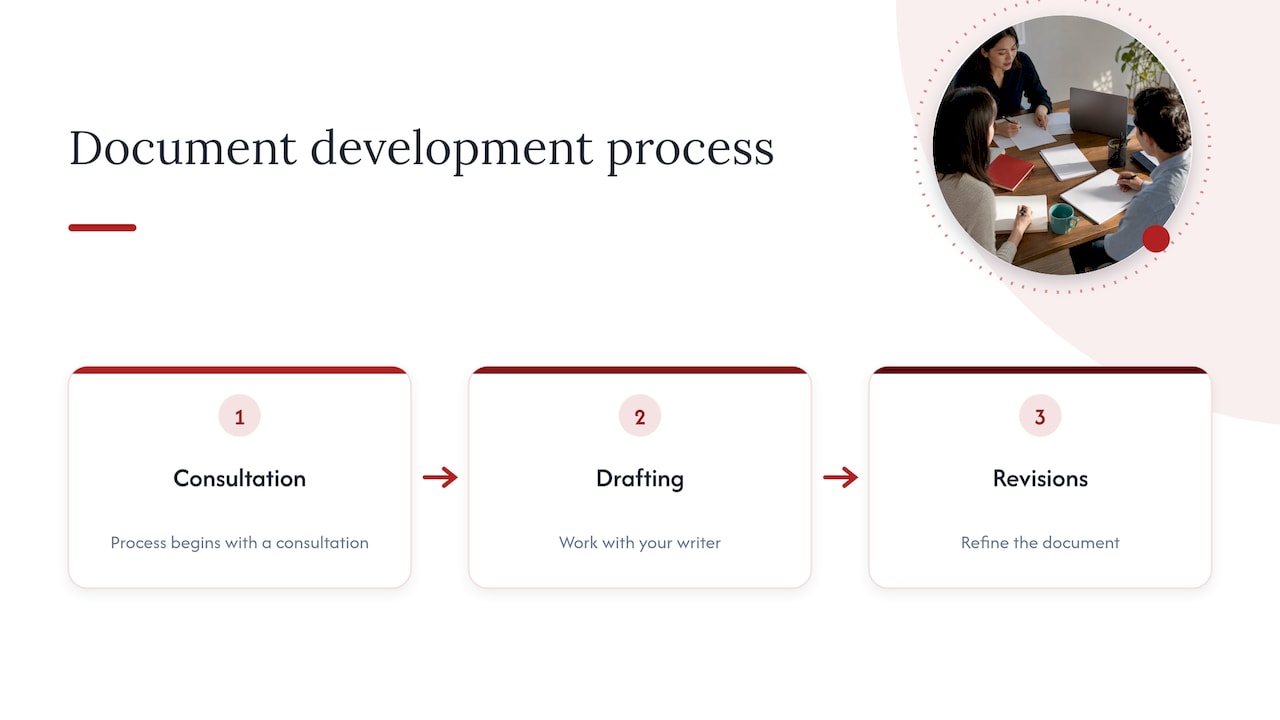
The second point is that formatting and substance are not separate questions. A document that is easy for applicant tracking systems to read, and that mirrors a posting’s language honestly, gets in front of a person. A document that is clever but unreadable by software does not. That is why our process begins with a consultation, then moves to drafting with your writer, then to revisions, and why we shape each document around industry norms and current hiring trends instead of a fixed template.
Finally, we treat the details of your search with discretion. Confidential searches, sensitive transitions and gaps in a record are conversations we are used to having.
— Professional
How we can help
If your target is an employer rather than a faculty committee, we can prepare the resume for you. Our published one-off prices are:
| Package | Price |
|---|---|
| Early Career Resume | $139 |
| Next Step Resume | $189 |
| Advanced Resume | $239 |
| Executive Resume | $289 |
You can compare them on our shop page, or go straight to the Executive Resume if you are preparing for a senior or C-suite search. We also offer LinkedIn profile optimization, so your online profile and your resume tell the same story. Sector-specific pages are available for technology and IT, financial services, education and legal professionals.
A short checklist before you send
- Have you confirmed whether the employer wants a resume or an academic CV?
- Is the document one to two pages if it is a resume?
- Are photograph, date of birth, marital status and nationality removed?
- Does the summary and first half page show the posting’s top requirements?
- Is your cover letter doing different work from your resume, adding context, not repeating bullets?
- If the application is federal, does each criterion have a concrete example with where, when and how?
- Is the file in the format the portal requests?
For a broader walkthrough, our article on writing a resume that gets noticed in Canada goes through each section.
FAQ
Is a CV the same as a resume in Canada?
No, outside Quebec they are different documents. A resume is a one- to two-page summary tailored to a job, and a CV is a comprehensive record used mainly for academic, research and scientific roles. In Quebec the words are often used interchangeably, but recruiters still expect a concise, resume-style document.
Should I send a CV or a resume when applying for jobs in Canada?
Send a resume for most industry and public sector roles. Send a CV for faculty positions, research posts and graduate or professional programs. If a posting asks for a CV and the employer is a business, confirm with the recruiter, or send a tailored resume.
How long should a Canadian CV be?
There is no standard limit for an academic CV. Lengths of five, ten or twenty pages are common as a career progresses. Lead with your most relevant material and follow any page limit in the posting.
Should I include a photo or date of birth?
No. Canadian practice is to leave off photographs, date of birth, marital status and nationality. Following that norm keeps your application aligned with local hiring practice and avoids unconscious bias.
Can I use the same document for every application?
It is not advisable. McGill’s career experts say generic documents are significantly less effective, so adjust the summary, skills and top achievements for each posting.
Sources
- Write a Canadian resume and cover letter for your job search in Canada (RBC)
- The difference between a resume and a CV (Randstad Canada)
- CV or Resume (Trent University Careerspace)
- Resume, CV, Cover Letter, and Interview Tips (Memorial University)
- Writing a C.V. (McGill University)
- Foreign candidates (Job Bank)
- How to apply (Canada.ca)
- How to apply for jobs (Parks Canada)