
The education section on a resume needs just four elements: degree and field of study, institution name, location, and graduation date (or expected date). List it above your work experience only if you’re a recent graduate or the job demands a specific credential; otherwise, place it after your professional history. Add honours or coursework only when they actively strengthen your candidacy for that specific role.
TL;DR:
- Listing a relevant degree or credential prominently can be crucial for career pivots or recent graduates, even with extensive work experience.
- Keep education entries simple and consistent, focusing on the most recent, relevant, and distinctive details, and avoid cluttering with unrelated coursework.
- Placement of the education section depends on your career stage; prioritize it for new graduates or credential-dependent roles, but place it after experience for seasoned professionals.
- Only include GPA if it is 3.5 or higher, and tailor optional details like honors or coursework to match the specific job requirements.
- Use a straightforward, linear format without tables or columns; ensure every detail directly supports your fit for the role and enhances your credibility.
Table of Contents
- What belongs in your education section
- Where to place the education section on a resume
- How to list education on your resume by career stage
- Practical tips and mistakes to avoid
- How Professionalresumes approaches the education section
- A fast litmus test for what to keep
- Get your education section built right the first time
- Sources
- FAQ
What belongs in your education section
Four fields are non-negotiable. Every entry should include your most recent degree or ongoing education, the school name and location, field of study, and a graduation year or expected date. Miss one of these, and a recruiter has to guess. Guessing costs you seconds you don’t have on a 20-second resume scan.
Beyond the essentials, a handful of optional additions can work in your favour, but only when they’re doing actual work:
- Honours and awards — Dean’s List, scholarships, academic distinctions. Include these if they’re recent and relevant to the field you’re entering.
- GPA — worth listing only when it strengthens your application, which generally means 3.5 or higher. Below that, leave it off entirely. A missing GPA reads as neutral; a low one may be a liability.
- Relevant coursework — two or three courses, named specifically, that map directly to the job posting’s requirements.
- Projects or thesis titles — particularly valuable for recent graduates with limited work history, since a capstone project can double as proof of applied skill.
- Language of instruction — worth noting when you studied outside your target country and the hiring manager might otherwise wonder about your English or French fluency.
If you’re still in school, label the entry honestly. Include an expected graduation date rather than leaving the date field blank or vague. If your program stalled or you left before finishing, list completed credits or relevant coursework instead of writing “incomplete” or “unfinished”. “Unfinished” reads as a red flag; “87 credits completed toward a B.Comm” reads as a fact.
Where to place the education section on a resume
Placement comes down to one question: where does this section best answer the recruiter’s first question about your qualification? Work through it in this order:
- Recent graduate with limited work history — put education above your experience section. It’s your strongest asset right now, so lead with it.
- Role requiring a specific credential — nursing licence, professional engineering designation, CPA. Place education first even if you have years of experience, because the credential is the gate, not a bonus.
- Career pivot into a new field — if you’ve completed a relevant certificate or diploma, move it up near the top to signal your new direction before a recruiter assumes you’re the same professional you were three years ago.
- Mid-career or senior professional in a stable field — list education after your experience. Your track record is doing the persuading now, not your transcript.
Keep every entry visually consistent and simple for applicant tracking systems: no tables, no columns, no unusual date formats. A clean, linear layout parses correctly whether a human or a bot reads it first.
How to list education on your resume by career stage
The format holds steady across career stages: degree and field first, then institution, location, date, and any optional detail worth including. What changes is how much you include and how prominently you place it.
Recent graduate:
- Bachelor of Arts in Psychology, University of Waterloo, Waterloo, ON. Expected graduation: June 2026. GPA: 3.8. Relevant coursework: Cognitive Behavioural Interventions, Research Methods in Psychology. Capstone project: designed a peer support intervention piloted with 40 first-year students.
This entry earns its length. Every line points toward employability, not just academic completion.
Experienced professional:
- Bachelor of Commerce, McGill University, Montréal, QC, 2011.
That’s it. If you graduated more than 10 to 15 years ago and space is tight, drop the graduation year altogether or list just the decade. Nobody hiring a director of operations needs to know you finished school in 2009.
In-progress education:
- Master of Business Administration, York University, Toronto, ON. Expected graduation: December 2026. Relevant coursework: Strategic Financial Management, Organizational Leadership.
Naming the expected date and one or two relevant courses shows momentum without overselling an unfinished credential.
Incomplete education:
- Bachelor of Science in Computer Science, University of Alberta, Edmonton, AB. Completed 90 credits (2019–2021). Relevant coursework: Data Structures, Web Application Development.
If the coursework connects more to your target job than to a formal degree, consider moving some of it into a separate “professional development” section instead, alongside certifications and online courses. That reframes an unfinished degree as a set of applied skills rather than an unmet goal.
Practical tips and mistakes to avoid
A practical rule of thumb keeps each entry to roughly 15 to 30 words, tailoring the optional details to the specific job posting rather than repeating the same block on every application.
Do this:
- Use the institution’s official name (Toronto Metropolitan University, not “TMU,” on a first reference).
- Format every date the same way across the whole resume — month and year, or year only, never a mix.
- Tailor coursework and projects to match keywords in the job description.
- List degrees in reverse chronological order, most recent first.
- Keep each entry short enough to scan in under five seconds.
Avoid this:
- Listing a GPA under 3.5 out of habit rather than strategy.
- Cramming in every course you ever took, relevant or not.
- Writing vague labels like “various courses” or “general studies” with no specifics.
- Mixing abbreviations inconsistently (B.A. in one line, “Bachelor of Arts” in the next).
Pro Tip: Run a 30-second audit before you submit any resume: read only your education section out loud. If nothing in it directly supports the job you’re applying for, cut it back to the four essentials and stop there.
How Professionalresumes approaches the education section
Professional resume services build education entries around the same principle: match the depth of detail to what the job actually needs, whether that’s a first resume for a new graduate or a senior document for someone with extensive experience. The approach adjusts formatting, phrasing, and placement based on career stage and industry, from entry-level resumes for construction and trades roles where certifications need to be front and centre, to finance sector resumes where regulated credentials carry real weight with recruiters.
A professional editor typically catches things you won’t spot on your own:
- ATS formatting errors that make a perfectly good degree invisible to scanning software.
- Coursework or project descriptions phrased generically instead of tied to the target job.
- International credentials that need translation or context for a Canadian hiring manager.
DIY education sections tend to underperform most in three narrow cases: career pivots where old coursework needs reframing, international degrees that require equivalency context, and executive resumes where credential placement affects perceived seniority. In those situations, a second set of trained eyes is worth more than another hour of self-editing.
A fast litmus test for what to keep
Placement should track signal strength, not a rigid formula based on years of experience — a credential that directly answers a job requirement earns top billing even for a 20-year veteran. For anything optional, run three questions: does it prove fit for this specific job? Is it recent enough to matter? Is it distinctive rather than generic? If an item fails all three, cut it. Then read your education section as if you were the hiring manager, not the graduate who earned it.
— Professional
Get your education section built right the first time
Formatting rules only get you so far. Deciding what to include, how much detail to add, and where to place it for your specific industry takes judgment that’s hard to apply to your own resume objectively. Professionalresumes builds that judgment into every project instead of leaving you to guess.
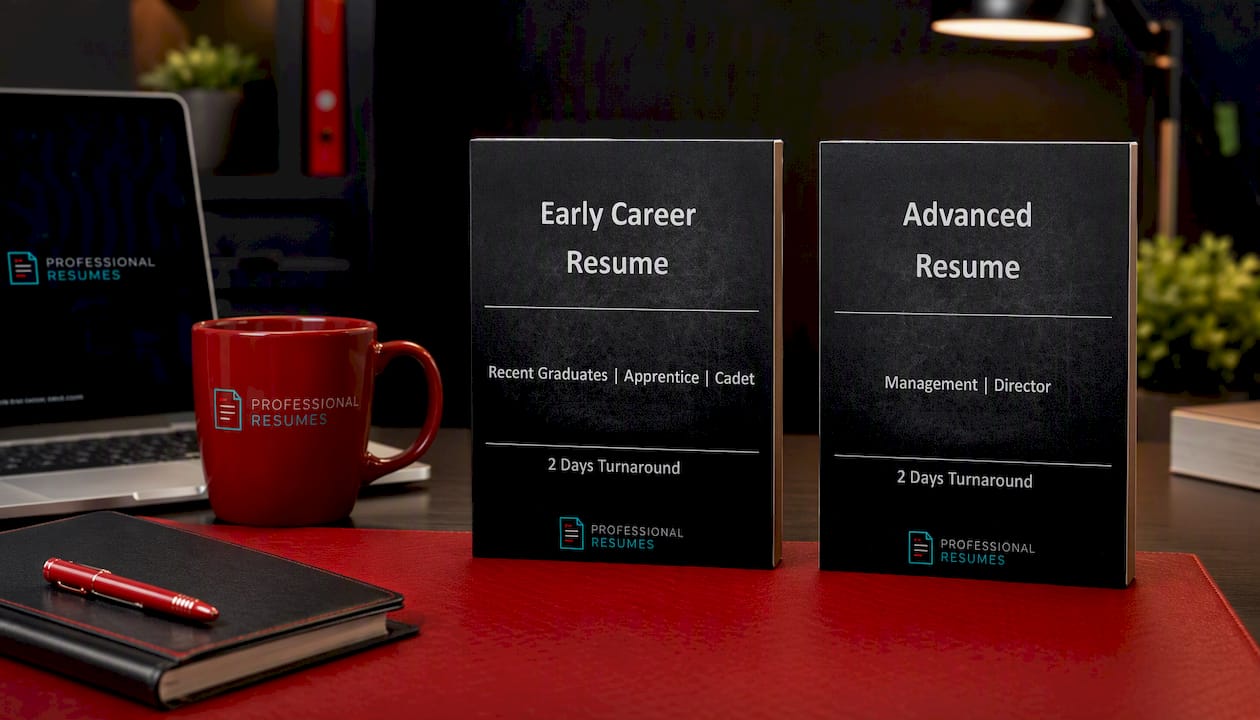
The Early Career Resume service is built for recent graduates and early-career job seekers who need to make a thin work history look substantial. It’s the right fit if your degree, projects, and coursework are still your strongest selling points. The Advanced Resume service is built for mid-career and senior professionals, including those navigating a career transition, and it includes ATS-friendly formatting plus a full consultation to decide exactly how much education detail belongs on the page. Whichever stage you’re at, the next step is the same: get a resume that puts your education exactly where it earns you the most credibility, and not a line further.
Sources
- How to List Education on a Resume (With Examples) | Indeed Career Guide
- How to List Education on a Resume: Examples, Tips, and Unique Scenarios | Coursera
- How to Write the Education Resume Section That Gets Read | StoryCV
FAQ
How do I write an education section on a resume?
Lead with your degree and field of study, then list the institution name, location, and graduation date (or expected date). Add GPA, honours, or coursework only if they strengthen your fit for the specific job.
What counts as a red flag in a resume’s education section?
Vague labels like “various courses,” inconsistent date formats, and unexplained gaps without context all read as red flags to recruiters. Listing a weak GPA out of habit, rather than leaving it off, is another common one.
What are common mistakes people make in their education section?
The most frequent ones are overloading the section with irrelevant coursework, mixing degree abbreviations inconsistently, using non-official institution names, and failing to tailor coursework to the job posting.
What should I avoid putting in my resume’s education section?
Avoid a GPA below 3.5, coursework with no connection to the target role, and vague terms like “incomplete” for education still in progress. List completed credits or relevant coursework instead.
Should I include my GPA on a resume?
Only if it’s 3.5 or higher. Below that threshold, omitting it entirely is the safer, more strategic choice.