
Use a professional summary in most cases. It leads with what you offer an employer, not what you want from them, and it is what modern applicant tracking systems and recruiters are built to scan first. Reserve a resume objective for narrow situations: new graduates with no work history to summarize, deliberate career changers, or candidates explaining a short employment gap. Everything else belongs in a summary.
TL;DR:
- A professional summary is preferred over an objective because it highlights your skills, experience, and achievements in two to four sentences, improving ATS parsing and recruiter attention.
- Summaries should be immediately below contact details and include your job title, three relevant hard skills, and one quantifiable result to stand out effectively.
- Objectives are only suitable for new graduates, career changers, or those explaining employment gaps, and should focus on employer needs rather than personal goals.
- When writing a summary, structure it around identity, expertise, achievement, and optional future contribution, tailoring keywords to each specific job posting.
- Skip both if your current role clearly signals your target position and your work history alone provides sufficient context.
Table of Contents
- Resume objective vs summary: what a professional summary actually is
- What a resume objective is and when it still earns its place
- Objective or summary: the differences that actually change your outcome
- How to write a resume summary that actually beats the scan
- How to write an objective that doesn’t sound like filler
- When your resume needs neither
- Quick decision checklist: summary, objective, or nothing
- How Professionalresumes turns this guidance into a finished resume
- A resume professional’s take on getting the opening right
- Get your summary written by someone who does this daily
- Sources
- FAQ
Resume objective vs summary: what a professional summary actually is
A professional summary is a two to four sentence block at the top of your resume, sitting directly below your name and contact information. It tells a recruiter who you are professionally before they read a single bullet point of your work history. Think of it as the pitch a colleague would give if they were introducing you in a hallway, minus the small talk.
ATS platforms and human reviewers treat this space differently than the rest of your resume. A professional summary outperforms a resume objective in almost every scenario because it functions as a high weight field. The system extracts your job title, years of experience, and skill signals from those opening lines, and recruiters skim the same block for the same information in the seconds before they decide whether to keep reading.
Label it “Summary” or “Professional Summary.” Skip “Objective” for this section entirely.
- Place it immediately after your contact details, above your work history
- Keep it to two to four sentences, no longer
- Open with your job title or professional identity, not a personal pronoun
- Avoid vague adjectives like “hardworking” or “detail oriented” without proof behind them
Pro Tip: Recruiter attention is concentrated in the top third of the page. A weak opening can stall the review before your best experience ever gets seen.
What a resume objective is and when it still earns its place
An objective is a one or two sentence statement of intent. It tells the employer what role you want and, ideally, why you are qualified to fill it. Where a summary sells your value, an objective states your direction. That distinction sounds small, but it changes how a reviewer reads the rest of your resume.
Career-centre guidance generally treats the objective as a weaker default choice, useful only when your work history cannot yet speak for you. Some guidance explicitly recommends avoiding objectives for most applicants because the format centres your wants over your value. Three situations still justify it:
- You are a new graduate with limited paid experience and need to state your target role clearly
- You are pivoting into a different industry or function and your past titles do not signal your new direction
- You have a short employment gap and want to frame your intent before a reviewer starts asking questions
When you do write one, keep it employer focused. Name the role, then name one or two transferable strengths that make you a credible fit, rather than describing what you personally hope to gain.
Objective or summary: the differences that actually change your outcome
The choice comes down to focus. A summary tells an employer what you bring; an objective tells them what you want. That single difference explains nearly every other gap between the two formats.
- Focus: Summary highlights your value and evidence; objective states your intent and target role
- Length: Summary runs two to four sentences; objective usually stays to one or two
- ATS handling: Summaries carry more parsing weight because they contain title and skill signals ATS software is built to extract
- Recruiter read: A summary answers “why should I keep reading?” while an objective answers “what does this person want?”
- Flexibility: An objective can often be reframed into a mini summary by swapping the wish statement for a value statement, using the same sentence length
A summary is generally the safer bet across resume formats and industries, according to career-centre guidance that favours evidence-based summaries over objective statements for applicants with any work history at all. The exception stays narrow: real career changers, first-time job seekers, and people who need to explain a gap before the resume moves forward.
How to write a resume summary that actually beats the scan
A reliable summary follows a four-part pattern: identity, expertise, achievement, and an optional line of intent. This structure maps cleanly to how ATS platforms extract data and how recruiters scan a page, because each part answers a different question they are already asking.
- Identity — state your job title or professional category in the first few words
- Expertise — name two or three hard skills pulled directly from the job posting’s language
- Achievement — include one quantified result: a number, a percentage, a dollar figure, or a scale
- Optional intent — close with a line on what you are aiming to contribute next, if space allows
A two to four sentence summary with a title signal, three to five hard skills, and one quantified result consistently performs best across ATS platforms. Here is how that formula plays out across career stages:
- Early career: “Marketing graduate with hands on experience in social media analytics and content scheduling. Managed a student campaign that grew engagement by 40% in one semester.”
- Mid-career: “Operations manager with seven years overseeing warehouse logistics for a mid-size distributor. Reduced shipping errors by 18% through a redesigned quality check process.”
- Technical: “Backend developer specializing in Python and distributed systems. Cut average API response time by 30% across three production services.”
- Leadership: “Director of finance with 12 years leading budgeting and forecasting for a $200 million division. Directed a cost reduction initiative that saved $1.4 million annually.”
Employers and career centres consistently favour evidence over generic adjectives in these statements. Swap “results driven professional” for the actual result every time. For a deeper walkthrough with more sentence variations, see this guide to writing a career summary that Canadian recruiters respond to.
How to write an objective that doesn’t sound like filler
A working objective template looks like this: “[Job title] seeking to bring [transferable skill or experience] to a [target role/industry] position, with a focus on [specific value you’d add].” It stays employer-focused by keeping the emphasis on what you contribute, not what you personally want out of the arrangement.
- New graduate: “Recent business administration graduate seeking an entry-level analyst role, bringing strong Excel modelling skills and a semester-long internship analyzing retail sales data.”
- Career changer: “Former high school teacher transitioning into corporate training, bringing eight years of curriculum design and public speaking experience to a learning and development role.”
- Return to work after a gap: “Marketing coordinator returning to the workforce after a family leave, bringing five years of campaign management experience and recent certification in Google Analytics.”
- Industry switcher with adjacent skills: “Retail store manager pivoting into logistics coordination, bringing proven inventory control and team scheduling experience to a warehouse operations role.”
When making a pivot, foreground the destination role’s keywords and one project or achievement that proves you can transfer, according to guidance on career-change resumes. Fresh graduates should lean on the same principle: naming a real project beats naming a personality trait, a point NACE’s research on high-impact skills reinforces for early-career candidates specifically. For more graduate-specific phrasing, this early career resume guide offers additional templates.
When your resume needs neither
Some resumes do not need a summary or an objective at all. If your most recent job title already signals your target role clearly and your work history speaks for itself, adding either block can feel redundant, even repetitive.
- A senior specialist moving into an almost identical role at a comparable company often does better leading with a short professional title line instead of a full summary
- Highlighting one flagship project or certification directly under your name can carry more weight than a generic paragraph
- If you have a strong portfolio, GitHub profile, or published work, a single line linking to it near the top often outperforms three sentences describing your skills in the abstract
The test is simple: if a summary or objective would only restate what your job title and first bullet point already show, skip it and use that space for something concrete instead.
Quick decision checklist: summary, objective, or nothing
Run through this three-step flow for every application, because the right answer can change from one posting to the next.
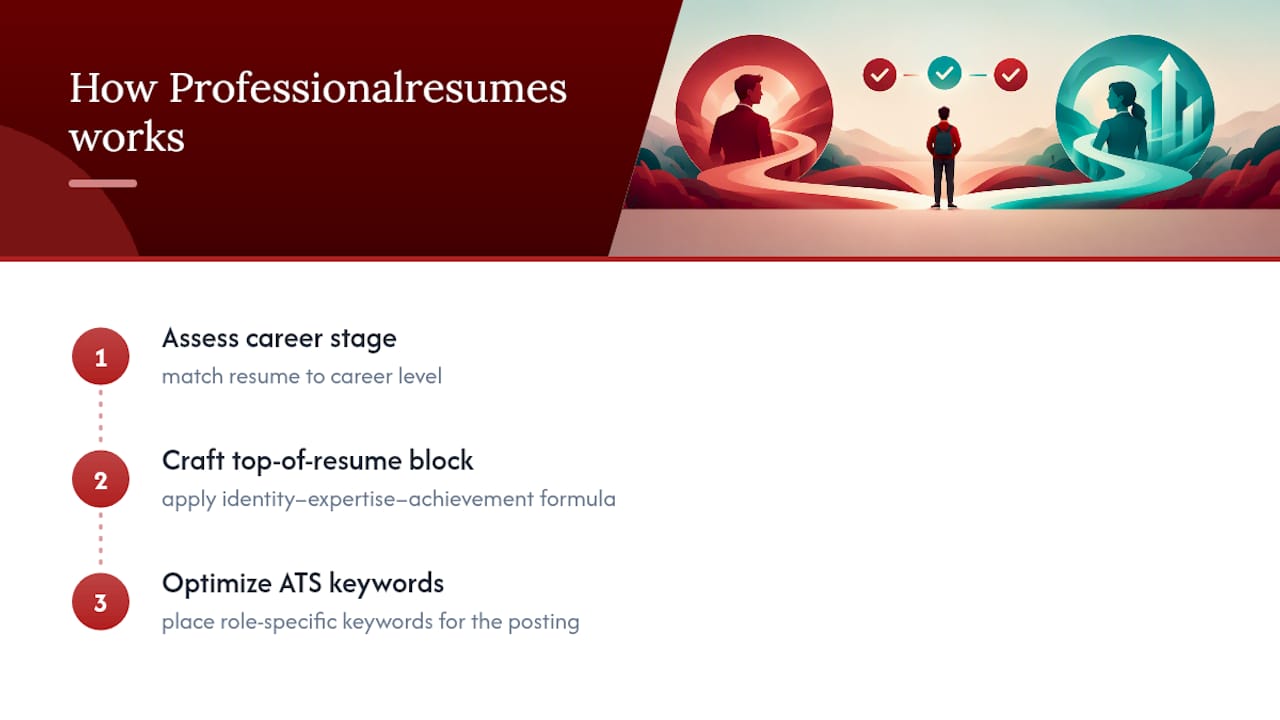
- Check your experience level. If you have relevant paid or internship experience, default to a summary.
- Check whether you need to explain a transition. If you are changing careers, entering the workforce for the first time, or covering a short gap, an objective may serve you better.
- Check role specificity. If the posting uses precise language you can mirror, a targeted summary almost always beats a generic objective.
Watch for two red flags: vague adjectives with no evidence behind them, and a section labelled “Objective” that adds nothing relevant to the role. Before you submit, confirm your top block echoes the job title’s exact wording and includes at least one quantified result, per the ATS-focused writing guidance recruiters and parsing systems both respond to.
Pro Tip: Save two versions of your opening statement, one summary and one objective, then pick the one that matches the posting’s language most closely before you send it.
How Professionalresumes turns this guidance into a finished resume
Knowing the formula is one thing. Applying it consistently, across every application, in language that matches each posting, is where most job seekers lose momentum. Professionalresumes builds that top-of-resume block as part of a full resume package, matched to your career stage.
The resume packages suit professionals at various career stages who need summaries that reflect their experience and aspirations. Writers apply the identity, expertise, achievement structure covered above, adapted to ATS-aware keyword placement for the specific role targeted.
A resume professional’s take on getting the opening right
The recommendation holds: lead with a summary unless you fall into one of the narrow cases where an objective genuinely serves you better. The habit worth building is smaller than it sounds. Before you submit anything, mirror the job posting’s exact title and pull two of its keywords into your opening lines. Try it on your next application and watch how differently the rest of the resume reads once that top line matches the role.
— Professional
Get your summary written by someone who does this daily
Templates get you most of the way there. What they cannot do is judge which achievement matters most for a specific posting, or catch the subtle mismatch between your current title and the role you are targeting. Professionalresumes builds that judgment into every package through direct consultation, not a form to fill out. Resumes include ATS-aware formatting and tailored summaries based on the identity, expertise, achievement formula, with revisions aimed to ensure the opening block reflects the role targeted.
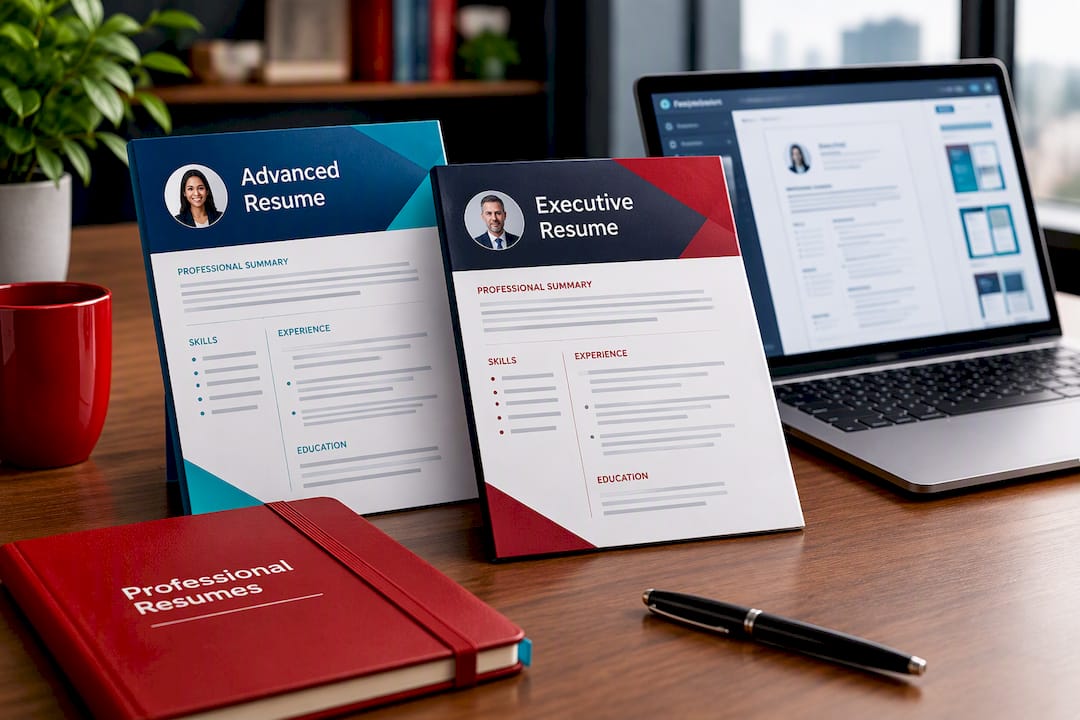
If you are several years into your career and want a summary that reflects real progression, the Advanced Resume package is built for that stage. If you are applying for leadership roles and need a summary with board-level language and measurable outcomes, the Executive Resume package is the stronger fit. You can also compare all packages, including entry-level options, on the full resume shop page, or pair your new resume with a matching LinkedIn profile optimization so your headline and summary say the same thing everywhere a recruiter looks.
Sources
- Resume Summary vs Objective: Which One ATS and Recruiters Actually Prefer
- Difference Between Resume Summary & Objective – Rockwell Career Center
FAQ
What is a good objective for a resume example?
A good objective names the target role and one or two transferable strengths, such as: “Recent graduate seeking a marketing coordinator role, bringing hands-on experience in social media analytics and content scheduling.” It stays employer-focused rather than describing what the applicant personally wants from the job.
What is the 7 second rule for resumes?
Recruiters scan a resume very briefly before deciding whether to read further, with attention concentrated in the top third of the page. That is why the summary or objective at the top carries so much weight.
Are objectives on resumes outdated?
For most applicants with any work history, yes. Career-centre guidance generally treats objectives as outdated in favour of evidence-based summaries, reserving objectives for new graduates, career changers, and candidates explaining a short gap.
Is it okay not to put an objective on a resume?
Yes, and for experienced candidates it is usually the better choice. A summary that highlights your value typically outperforms an objective, and if your job title already speaks for itself, skipping both in favour of a short professional title line can work just as well.
What does Professionalresumes charge for a resume with a professional summary?
Pricing depends on the package and career stage; current prices are listed on the Professionalresumes shop page. Packages range from entry-level resumes through the Advanced Resume and Executive Resume tiers, each including a tailored summary built on the formula covered above.