
A strong resume summary is 2 to 4 lines placed at the top of your resume that names your professional title or level, lists 2 to 3 top skills, and quantifies one achievement that shows an employer what you deliver. The single rule that governs everything else: write it last, after the rest of the resume is finished, so it reflects real accomplishments instead of aspirations. Every example that follows builds on that formula.
TL;DR:
- Tailor your resume summary to include the exact job title and keywords from the posting to improve ATS ranking and recruiter recognition.
- Limit the summary to 40 to 60 words, focusing on a relevant title, two to three top skills, and a measurable achievement that demonstrates your value.
- Write the summary after completing the rest of your resume to ensure it is based on actual accomplishments rather than aspirations or vague claims.
- Highlight quantifiable results, such as percentages or dollar figures, to provide concrete evidence of your effectiveness and stand out among candidates.
- Focus on achievement-based language rather than duties, ensuring your summary clearly communicates what you deliver on day one for the employer.
Table of Contents
- What is a resume summary?
- When should you use a resume summary?
- Why bother with a summary statement at all?
- Resume summary vs. objective: a quick rule
- How to write a resume summary: a 5-step process
- Resume summary examples by experience level and format
- Common mistakes and a six-item self-edit checklist
- Why professional writers draft the summary last
- What the research gets right, and where advice falls short
- Get hands-on help with your resume summary
- Sources
What is a resume summary?
A resume summary sits directly beneath your contact information and gives a hiring manager the case for reading further. It states your title or years of experience, names two or three areas of expertise, and closes with one measurable result or clear statement of value to the employer.
Length matters more than most job seekers assume. Aim for roughly 40 to 60 words, or 2 to 4 lines. Longer than that, and recruiters skim past it. Shorter, and it reads as filler rather than a pitch.
When should you use a resume summary?
A summary earns its place on the page for mid-career professionals, senior candidates, and anyone tailoring an application to a specific job posting. If you have relevant achievements to cite, lead with them.
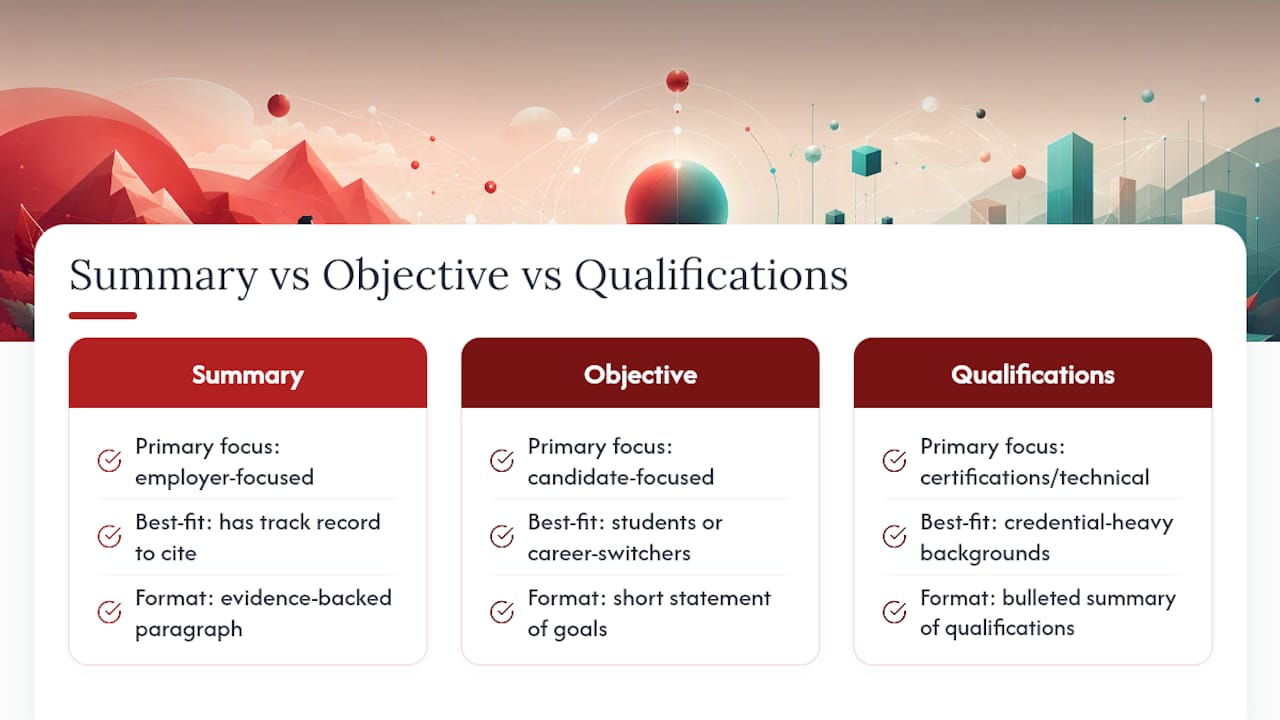
Long resumes packed with certifications or technical qualifications sometimes do better with a bulleted “summary of qualifications” instead of prose. Very early-career applicants with little paid experience, or anyone shifting into a structured training program, may still find an objective statement more honest than an inflated summary.
Why bother with a summary statement at all?
Recruiters scanning a stack of resumes decide fit in seconds. A summary puts your strongest match right where their eyes land first, instead of buried on page two.
It also does double duty for applicant tracking systems. Placing your target job title and 2 to 3 keywords near the top helps automated screens and human readers agree on the same conclusion. For career changers or people with gaps and pivots in their work history, a summary reframes a non-linear path around transferable skills rather than a chronological list that raises questions before you’ve had a chance to answer them.
Resume summary vs. objective: a quick rule
A summary is employer-focused. It tells the reader what you bring, backed by evidence, so use it whenever you have a track record worth citing. An objective is candidate-focused. It states what you want, and it fits a narrow set of cases: students, career-switchers with no relevant history yet, or workers entering their first structured role.
When your background is heavy on certifications or technical qualifications rather than narrative achievements, a bulleted “summary of qualifications” often communicates faster than a paragraph.
How to write a resume summary: a 5-step process
Follow this sequence and you’ll never stare at a blank line under your name again.
- Finish the resume first. Draft your work history, achievements, and skills sections before touching the summary. You can’t summarize accomplishments you haven’t written down yet, and experts consistently recommend this order because it keeps the summary anchored in real results.
- Identify the target title and keywords. Read the job posting and pull the exact job title and 2 to 3 recurring terms. These become the language your summary echoes.
- Draft your 2 to 4 lines. Cover who you are (title, years or level), what you do best (2 to 3 skills), and one quantified result that shows employer value.
- Tailor it per application. Swap the keywords and, where possible, the quantified result to match what each posting actually asks for. Robert Half’s guidance is blunt on this point: generic summaries get skimmed past.
- Edit for concision and active verbs. Cut adjectives that don’t carry information. Replace “responsible for” with what you actually did and what happened as a result.
Pro Tip: Ask a colleague or mentor to read your finished resume and tell you, in one sentence, what stood out. That sentence is often the strongest raw material for your summary, since outside readers catch achievements you’ve stopped noticing yourself.
Resume summary examples by experience level and format
Here are professional summary examples organized by career stage, plus three format options worth testing against your own resume.
Entry-level (paragraph format):
Strong writer with working knowledge of Canva and basic analytics tools.
Personalize the internship detail, the percentage, and the named tools.
Early career, 2 to 4 years (bulleted summary):
- Project Coordinator with 3 years supporting cross-functional teams in the software sector.
- Skilled in Asana, stakeholder communication, and timeline management.
- Reduced average project delivery time by 15% through improved intake processes.
Mid-career (paragraph format):
"Customer Service Manager with 8 years leading teams of up to 12 representatives in high-volume retail environments. Expertise in conflict resolution, CRM systems, and staff training.
Swap the team size, tools, and satisfaction figures for your own.
Senior/executive (transferable-skills summary):
“Operations leader with 15+ years spanning manufacturing and logistics. Areas of expertise include supply chain optimization, P&L ownership, and vendor negotiation. Led a plant consolidation that cut annual overhead by $1.2 million.”
Readers moving toward this level often benefit from understanding how an executive summary differs from a standard professional one before drafting theirs.
Each format works. The paragraph style reads naturally, the bulleted version scans faster on mobile, and the transferable-skills approach helps when your history spans more than one industry.
Common mistakes and a six-item self-edit checklist
The same errors show up across thousands of resumes: vague adjectives with nothing to back them up, duty lists instead of results, missing job-specific keywords, summaries stretching past 4 lines, and zero quantified achievements anywhere in the statement.
Quick checklist:
- Does it name your title or experience level in the first line?
- Does it list 2 to 3 specific, relevant skills?
- Does it include at least one number, percentage, or dollar figure?
- Does it echo language from the job posting?
- Is it under 60 words?
- Would a stranger know what you’d deliver on day one?
Before: “Hardworking professional responsible for managing a team and handling customer issues.”
Quantifying results turns a vague claim into evidence a hiring manager can act on. Formatting matters too. Unusual symbols or dense paragraphs can confuse ATS parsers, which is one more reason ATS-friendly formatting belongs on your pre-submission checklist.
Why professional writers draft the summary last
Writing the summary after the rest of the resume isn’t a stylistic preference. It’s a sequencing decision that produces sharper, more evidence-backed statements, because you’re synthesizing what you actually accomplished rather than guessing at what sounds impressive.
Professional resume writers spend most of a project extracting the achievements clients undervalue: the process fix nobody asked them to make, the retention number they never thought to mention, the dollar figure buried in a performance review. That extraction work, paired with knowledge of how applicant tracking systems parse keywords, is what separates a generic summary from one that survives both the algorithm and the recruiter’s six-second scan.
What the research gets right, and where advice falls short
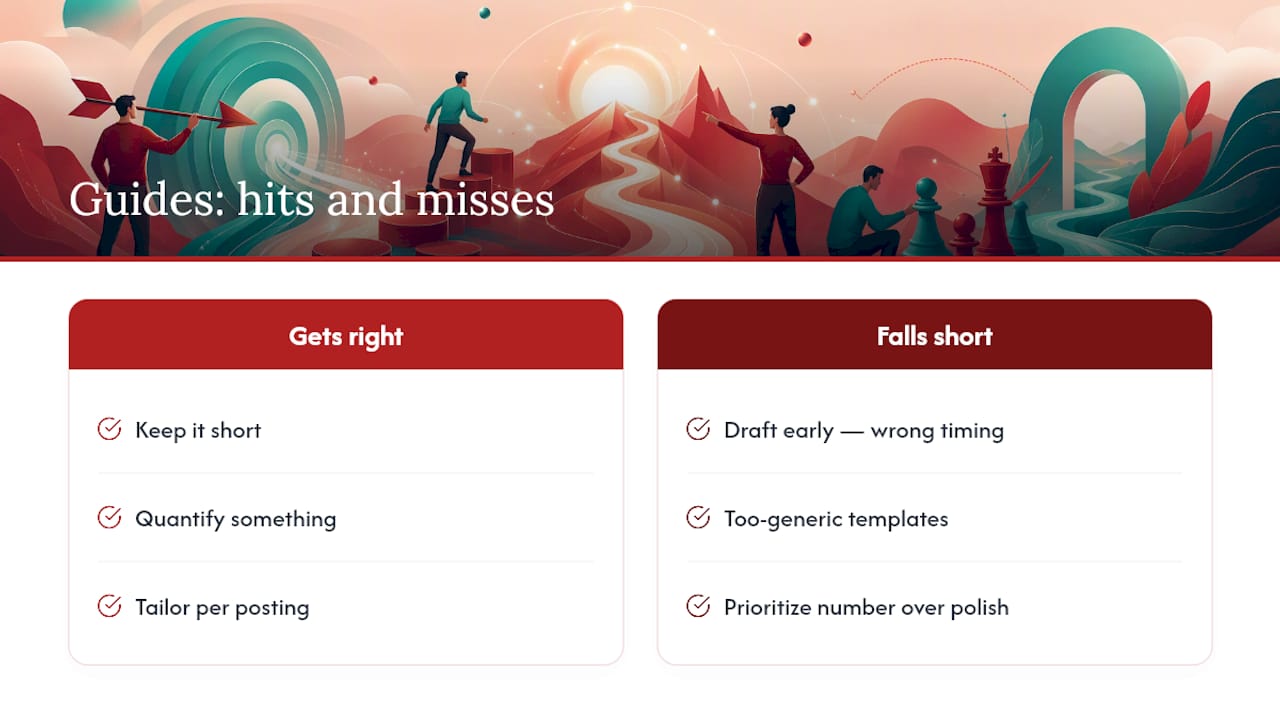
Most guides agree on the mechanics: keep it short, quantify something, tailor it per posting. Where the advice consistently falls short is timing. Writers are told to draft a summary early, as a kind of warmup, when the opposite order produces better results almost every time.
The other gap is specificity. Generic templates tell you to “highlight your strengths,” which is advice so broad it’s nearly useless. The better instruction is narrower: find the one metric, dollar figure, or percentage that proves your strongest claim, and build the summary around that single data point rather than a list of adjectives.
If you take one thing from this, prioritize the quantified result over polish. A summary with one hard number and average phrasing will outperform elegant prose with nothing to measure, every time a recruiter has to choose between two candidates in the same stack.
— Professional
Get hands-on help with your resume summary
Writing a summary that survives both an ATS scan and a six-second human read is harder alone than it looks on paper. Professional resume writing services build that top-of-page statement around achievements that move hiring decisions, tailored to your target role rather than a generic template.
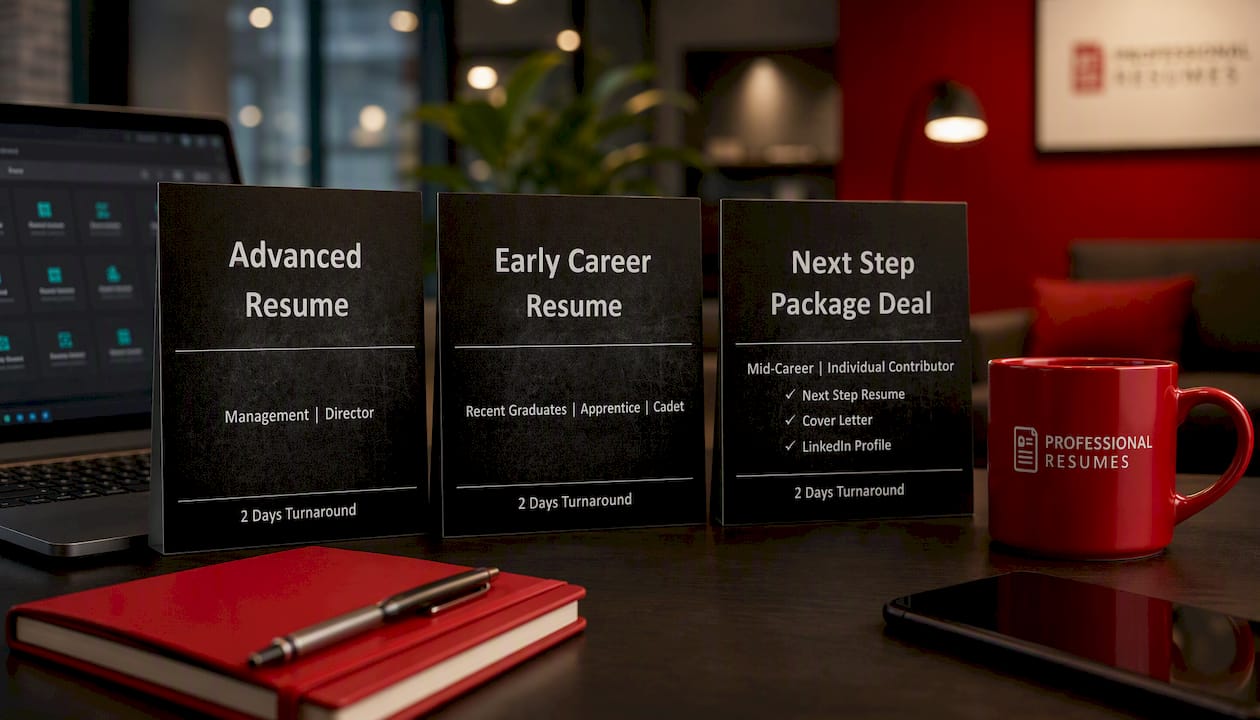
For senior professionals with a track record to distill into three sharp lines, the Advanced Resume service pairs in-depth consultation with multiple revisions to get the summary and full document right. Recent graduates and early-career applicants without a long work history to draw from get a different kind of support through Early Career Resume, which focuses on turning internships, coursework, and volunteer work into employer-facing value statements. If you need your resume, cover letter, and LinkedIn profile aligned around the same summary language, the Next Step Package Deal bundles all three into one coordinated project. Starting with a consultation can help tailor services to the role you’re targeting.
Sources
- A Guide to Writing a Resume Summary (With Samples) — Indeed
- How to Write a Powerful Résumé Summary — Forbes
- How to Write an Attention-Grabbing Resume Summary — Robert Half
- Resume Summary Examples — ATSgrader