
Write every accomplishment bullet as Action, Context, Result: open with a strong verb, name the scope, and end on an outcome. A model to copy: “Increased client retention by 59% by implementing a new feedback system for a portfolio of 500+ accounts,” as Yale’s career office shows. Below you will find examples by role and career stage, plus templates and a workflow.
TL;DR:
- Recover missing metrics from reviews, CRM exports, attendance sheets, and praise messages; use honest estimates or describe time saved, process gains, or broader responsibility.
- Match relevant posting keywords only when evidence supports them, lead with the closest achievement, and keep experience entries in plain bullets for applicant tracking systems.
- Save praise emails, reports, metrics, and milestone dates in one folder, then review it monthly or quarterly and retain the three strongest accomplishment bullets.
- Early career candidates can use project, coursework, and volunteer outcomes, while senior leaders should put leadership results before routine duties.
Table of Contents
- Which resume achievements examples fit your role?
- How does the PAR formula work, with templates?
- What if you cannot put a number on it?
- How do you build an accomplishment folder?
- How do you tailor bullets to a posting and stay ATS-friendly?
- What do strong bullets look like at each career stage?
- Why do measured accomplishments move interviews?
- Which Professional Resumes product fits you?
- FAQ
- Sources
Which resume achievements examples fit your role?
Each bullet below is labelled Action, Context, Result, so you can swap in your own details. Pick the role closest to yours, then change the nouns and numbers to match your real work.
- Sales: Negotiated (action) renewals with mid-market accounts (context), lifting repeat revenue (result).
- Marketing: Redesigned (action) a monthly email series for 12,000 subscribers (context), raising click-through rates from 2% to 3.5% (result).
- Operations: Reorganized (action) warehouse pick routes (context), cutting order turnaround (result).
- Customer service: Resolved (action) escalated billing complaints for a team (context), earning written praise from customers and a lower repeat-contact rate (result).
- Tech: Automated (action) a weekly reporting script for the product team (context), saving manual work (result).
- Administration: Coordinated (action) scheduling for managers across offices (context), eliminating double-booked meetings (result).
Notice the mix: percentages, absolute figures, and plain qualitative outcomes. Use whichever your records support. Then reread the job posting and echo its wording where your experience honestly matches. If it says “stakeholder reporting” and you wrote “management updates,” switch to their phrase. For software roles, our resume tips for the software industry go deeper on technical phrasing.
How does the PAR formula work, with templates?
PAR stands for Action, Context, Result. Career offices such as MIT’s Career Advising recommend starting with a strong verb, adding the project or scope, and closing with what changed. Recruiters scan quickly, and a bullet that ends on a result gives them something to remember. Plain bullets also parse cleanly in applicant tracking systems.
Fill-in-the-blank frames to try:
- [Action verb] [project or task] for [scale], resulting in [measurable outcome].
- Reduced [problem] by [amount] by [method] across [team or area].
- Led [team] to [deliverable], finishing ahead of schedule.
- Launched [initiative] that grew [metric] from [start] to [end].
- Trained [group] on [skill], improving [quality or speed measure].
Two before and after rewrites show the shift:
Before: “Helped with the student orientation program.”
After: “Coordinated student orientation sessions, earning strong satisfaction survey scores.”
Before: “Responsible for social media for a campus club.”
After: “Grew the club’s Instagram following by scheduling regular posts around event deadlines.”
Avoid the “we” trap. As Yale advises, verbs like led, developed or spearheaded make your own part clear, even on team projects.
What if you cannot put a number on it?
Numbers can usually be recovered. Check these places first:
- Past performance reviews and self-assessments
- Finance reports, CRM exports and sales dashboards
- Event sign-in sheets and attendance records
- Emails or messages where a manager or client praised your work
Princeton’s guide offers a good model: “Coordinated three fundraising events for local shelters, raising $8,000, 20% over goal.” When your records give only a rough figure, use “about” or “approximately” and keep it honest. If a number truly does not exist, say how you improved a process, saved time, or widened your scope of responsibility. Yale notes that concise qualitative results still count when they are stated clearly.
Pro Tip: Make scope explicit. People supervised, budget size and dataset size give a reader scale even when a percentage is out of reach.

How do you build an accomplishment folder?
A simple habit keeps your best evidence from disappearing. BC government career resources suggest storing emails, praise and metrics as they happen, so updates are easy later.
- Capture: Save praise emails, chat messages, reports and milestone dates in one folder.
- Review: Once a month or quarter, open the folder and ask: What changed? Who benefited? By how much?
- Convert: Turn each answer into a PAR bullet and keep the best three.
How do you tailor bullets to a posting and stay ATS-friendly?
Job Bank advises reviewing the job description, highlighting achievements related to the role, and quantifying results where possible. A quick method:
- Pull relevant keywords from the posting, then weave them naturally into each relevant bullet.
- Use plain bullet points in your experience section, and skip headers stuffed with keywords.
- Keep every keyword backed by a real result. A term with no evidence behind it will not survive the interview.
- Lead with the achievements closest to what the employer asked for.
What do strong bullets look like at each career stage?
Scope and tone shift with seniority. Early in your career, projects, coursework and volunteer outcomes carry the weight. Our guide to volunteer experience on a resume shows how to make unpaid work read as paid work. If you are moving sideways, see how to refresh your resume for a mid-career transition.
- Early career: Organized a peer tutoring program for first-year students, improving course marks.
- Early career: Managed an event budget for a campus society and delivered the event under cost.
- Mid-career: Rebuilt a team’s intake process, shortening client onboarding.
- Mid-career: Led a cross-department project with vendors, delivering ahead of schedule. Our project manager resume guide covers this style in depth.
- Executive: Directed a restructuring across business units and staff, returning the division to profitability.
- Executive: Owned a P&L and presented transformation outcomes to the board.
For senior roles, place leadership and strategic results first in each position, ahead of routine duties. If you work in finance, our tips for finance professionals show how to phrase budget and forecast results.
Why do measured accomplishments move interviews?
In our work as resume writers, the pattern is steady: a reader who sees a clear result stops skimming. Duties describe a job, while results describe you. Pick one bullet on your resume today and rewrite it with the PAR formula. If you are preparing for interviews as well, a prompt-based tool such as the STAR interview answer builder can help you turn that bullet into a spoken answer.
— Professional
Which Professional Resumes product fits you?
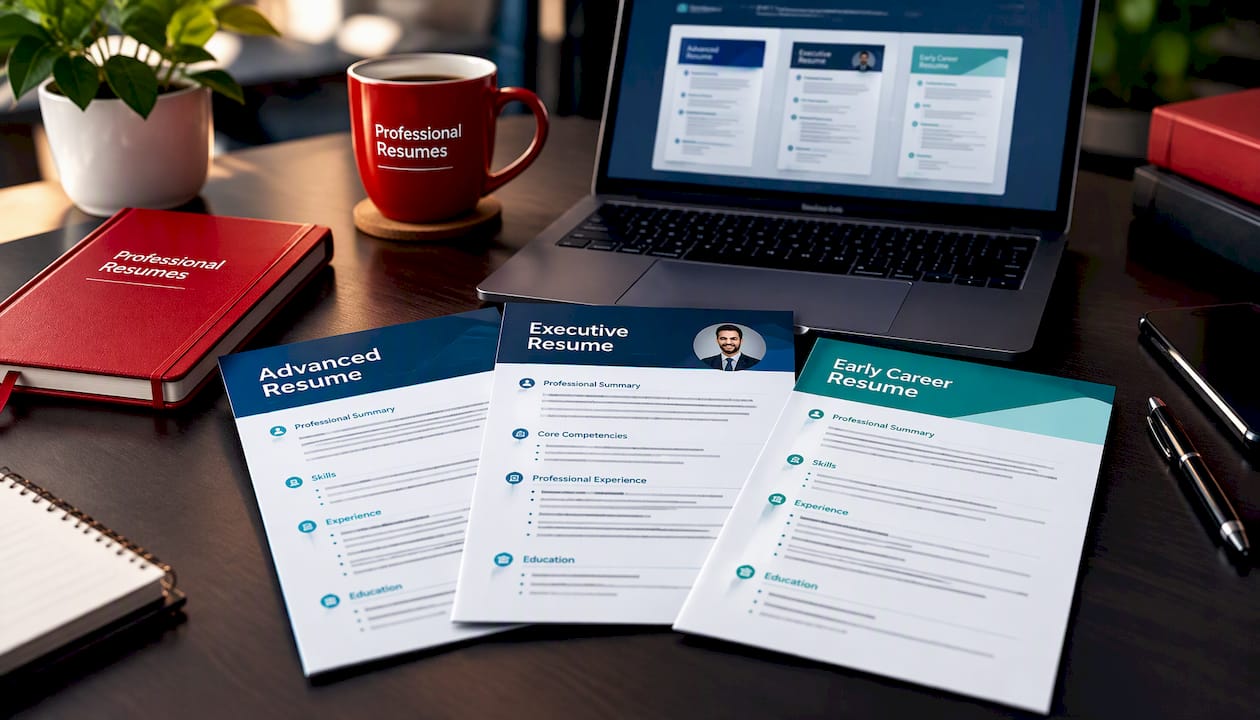
Every document we write is customized, ATS-friendly, and shaped through a consultation and revisions. Our Early Career Resume suits students and entry-level applicants, at $139. Our Advanced Resume is built for experienced professionals, at $239. Our Executive Resume serves senior leaders, at $289. Browse the full range in our shop, and pick the one that matches where you are now.
FAQ
What are good achievements to put on a CV?
Good achievements show a result you caused, such as growth, savings, time saved or improved quality. Pair each with a strong verb and the scope of your work, as in “Cut order turnaround across warehouse shifts.”
What is a summary of accomplishments?
It is a short section, or a set of bullets, that highlights your strongest results in one place. Each line follows the Action, Context, Result pattern so a reader sees your impact quickly.
How do you write achievements and awards on a resume?
List awards with the name, the issuer and the year, then add one line on why you won or what it recognized. Place achievements inside each role as PAR bullets so they sit next to the work that earned them.
What are some examples of personal achievements?
Personal achievements include organizing a fundraiser, completing a certification, or leading a volunteer project. Princeton’s example of coordinating three fundraising events for local shelters, raising $8,000 and 20% over goal, shows how to attach a result to one.
Sources
- Writing Impactful Resume Bullets – Office of Career Strategy – Yale University
- How to write a good resume – Job Bank
- Resumes: Writing about your skills – Career Advising & Professional Development | MIT
- Health-Related Employee Absences: FAQs for Managers/Supervisors
- Action-Oriented Accomplishment Statements | Center for Career Development