
In 2026, resumes succeed or fail on two factors: whether AI-enabled screening can parse and verify them, and whether the content proves measurable outcomes. Two moves matter right now: map your resume against a specific job description and add two quantified results, and build one master career file you can export and tailor on demand.
TL;DR:
- Resumes must incorporate quantified achievements and structured formats to ensure accurate extraction by AI screening tools.
- Use natural language with specific project details and verifiable evidence to stand out during automated and human review.
- Maintain a consistent, ATS-friendly layout with single-column design, standard fonts, and explicit dates for reliable parsing on any device.
- Keep a master file in a structured format like ResumeJSON or OCF to produce tailored, traceable resume exports efficiently.
- Disclose AI assistance when appropriate and back claims with primary evidence to build trust and prevent decision fatigue.
Table of Contents
- 1. Top 10 resume trends you need to know for 2026
- 2. How modern ATS and AI screening evaluate resumes in 2026
- 3. Structured resumes and portability: ResumeJSON and OCF explained
- 4. Converting duties into evidence: metrics, templates and examples
- 5. Design, accessibility and recruiter fatigue: layout that helps parsing and reading
- 6. AI assistance: how to use it responsibly and avoid being flagged
- 7. Professional Resumes: how our services map to 2026 resume needs
- 8. Keep human evidence central as the technology shifts
- Services that help you adapt now
- FAQ
- Sources
1. Top 10 resume trends you need to know for 2026
The resumes that clear screening and land interviews in 2026 share a common thread: they are built for both algorithmic review and human judgment. We see ten shifts worth acting on immediately.
- Reverse-chronological structure with a targeted summary. Recruiters and parsing tools both still favour clear chronology, paired with a two-line summary tuned to the specific role.
- Contextual keyword strategy over keyword stuffing. Modern parsing reads for meaning, not frequency, so phrases need to sit inside real sentences about your work, following the tailoring guidance in Coursera’s resume tips.
- Quantified achievements as the default, not the exception. Every major bullet carries a number, a percentage, or a comparable outcome.
- AI-aware phrasing with optional disclosure. Language that reads as genuinely yours, with provenance available if asked.
- Early use of structured resume formats. ResumeJSON and OpenCareerFormat give you one source file for every export.
- Mobile-first, parsable layout rules. Single columns, standard fonts, no tables that break on a phone screen.
- Short evidence lines with portfolio links. A bullet that points to a live artifact outperforms one that only claims a result.
- Accessibility and recruiter-friendly visual choices. Clean hierarchy beats decorative design nearly every time.
- LinkedIn as a canonical extension, not a duplicate. Your public profile and resume should align, as covered in our guidance on LinkedIn profile optimization.
- A master-file workflow with versioned exports. One current file, several tailored outputs, each traceable back to the source.
What ties these together is simple:
- Your resume is read by software before it is read by a person.
- The software is getting better at understanding context, not just matching words.
- The best defence against both bad parsing and recruiter skepticism is verifiable, specific evidence.
2. How modern ATS and AI screening evaluate resumes in 2026
Applicant tracking systems stopped relying purely on exact keyword matches some time ago. Current screening tools increasingly parse resumes contextually, extracting structured fields such as job titles, employment dates, and named skills as discrete data points rather than scanning for strings. That shift rewards resumes written in clear, natural sentences with explicit dates and titles, and penalizes dense keyword lists stapled to the bottom of a page.
AI-assisted screening layers add another dimension: many tools now watch for uniform, over-optimized phrasing that signals mass-produced or AI-generated text with no human edit pass. A resume that reads identically to a thousand others, structurally and tonally, draws more scrutiny, not less.
- Use natural, specific language tied to your actual projects, not generic competency statements.
- Include verifiable evidence (a metric, a link, a named outcome) wherever you make a claim.
- Keep structured fields, dates, titles, and skills, clean and consistently formatted so parsers extract them correctly.
Pro Tip: Run your resume through a plain-text copy and paste before submitting. If the structure collapses into a jumble, so will the parser’s read of it.
Nearly universal adoption now shapes this landscape: employer use of AI across the hiring workflow is widespread, and candidate AI use is similarly common, according to the 2026 Global AI in Hiring Report. That means your resume is likely assessed by automated triage first, then handed to a human reviewer who expects the content to hold up under closer reading, so optimize for accurate extraction first and persuasive framing second.
3. Structured resumes and portability: ResumeJSON and OCF explained
A PDF is a snapshot. A structured resume file is closer to a database entry you can reuse indefinitely. ResumeJSON is a structured data format built on JSON-LD and Schema.org vocabulary, defining typed blocks for work experience, skills, and education so machines can read your history reliably rather than guessing at layout. OpenCareerFormat (OCF) takes a similar idea further: a candidate-owned, portable master career file designed to hold everything once, so you export tailored versions as needed.
The practical benefit is fewer rewrites and a cleaner mapping to ATS fields. Adoption takes some care, though:
- Keep one master file and generate dated, descriptively named exports from it.
- Preserve provenance notes (what changed, when, and why) with each export.
- Treat OCF as promising but early: the project sits at version 0.3, pre-1.0, so pair it with a stable PDF or DOCX export rather than relying on it exclusively.
4. Converting duties into evidence: metrics, templates and examples
Vague duty statements lose to specific outcomes every time. The simplest fix is a context, action, result formula: what situation you faced, what you did, and what changed because of it.
A few worked examples: “Inherited a backlog of 40 unresolved support tickets, restructured the triage process, and cleared the queue within three weeks.” Or: “Led a five-person team through a system migration, reducing average page load time by 35%.” Use absolute numbers when the scale itself is the story (dollars managed, team size); use percentages when the improvement matters more than the baseline.
- Link to a portfolio, a published report, or a public repository wherever your work has a visible artifact.
- Note the scope: dates, stakeholders involved, and the boundary of what you owned, so the claim survives a follow-up question.
Pro Tip: If a bullet can’t survive the question “how do you know?”, rewrite it until it can.
5. Design, accessibility and recruiter fatigue: layout that helps parsing and reading
A resume that looks sharp but confuses a parser or a tired recruiter fails at its one job. Single-column layouts remain the safest default, with clear, consistently styled headings and no graphics that force text into unpredictable reading order.
- Keep fonts standard and sizes consistent, avoiding text boxes and embedded images that parsers skip entirely.
- Test your PDF on a phone screen before sending it anywhere.
- Skip heavily graphical resumes for most roles, and keep a plain text or simple DOCX version ready as a fallback for systems that reject styled files.
Our guidance on ATS-friendly formatting covers the specific formatting choices that tend to survive parsing intact.
6. AI assistance: how to use it responsibly and avoid being flagged
AI tools are useful for a first draft, a weak sentence, or a stuck moment. The risk comes from leaving that draft untouched. A workable process: draft with AI, edit heavily in your own voice, and attach verifiable links or artifacts that only you could produce.
Disclosure is situational rather than mandatory. A short line such as “drafted with AI assistance, fact-checked and finalized by me” works where a role or employer explicitly asks. Overreliance on opaque AI tools, on either side of hiring, risks what the Harvard Business Review describes as a kind of decision fatigue that erodes trust, which is part of why explainable, evidence-backed resumes read better than polished but hollow ones.
- Keep a folder of primary evidence (screenshots, reports, code, writing samples) a recruiter could actually inspect.
- Favour specific, checkable claims over smooth but generic AI-style phrasing.
Pro Tip: If you can’t explain a sentence in your own words in an interview, remove it from the resume now.
7. Professional Resumes: how our services map to 2026 resume needs
We build resumes tailored to various industries with ATS-friendly formatting at the core of every draft. Each service tier matches a career stage:
- Our Early Career Resume suits graduates and first-time job seekers who need structure and credibility more than density.
- Our Advanced Resume fits mid-career professionals consolidating a track record into evidence-based bullets.
- Our Executive Resume addresses senior candidates facing board-level scrutiny, where positioning and outcome language carry the most weight.
Every engagement includes consultation and revision rounds, producing a master document you can adapt across applications.
8. Keep human evidence central as the technology shifts
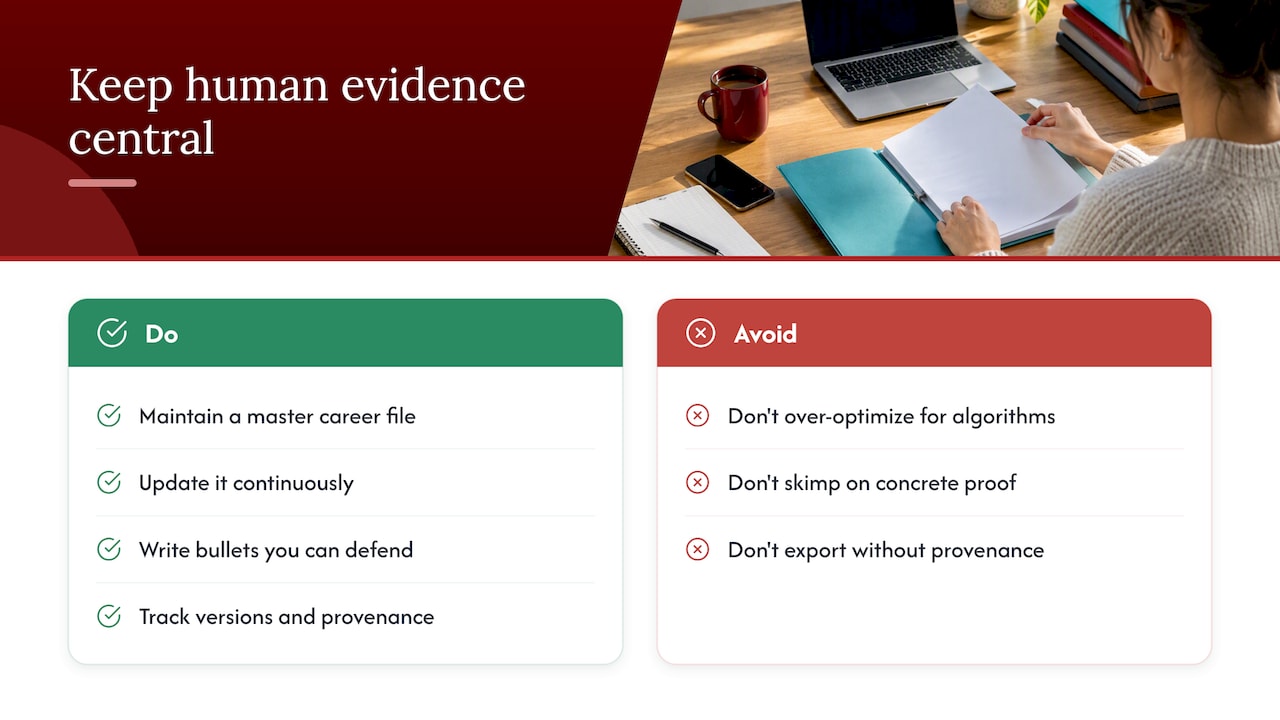
The temptation in any AI-driven hiring cycle is to over-optimize for the algorithm and under-invest in the proof. That trade-off backfires: screening tools are improving at spotting generic, over-polished text, and recruiters are the final judge regardless of what clears the first filter.
Own a master career file, update it continuously, and treat every bullet as a claim you could defend in an interview. Hire a professional writer when you need an outside eye on positioning or when the stakes (an executive search, a career pivot) justify it. Either way, track your versions and keep the provenance behind every exported file.
— Professional
Services that help you adapt now
We built our resume services around the same priorities covered above: ATS-ready formatting, quantified evidence, and documents that hold up under both automated and human review.
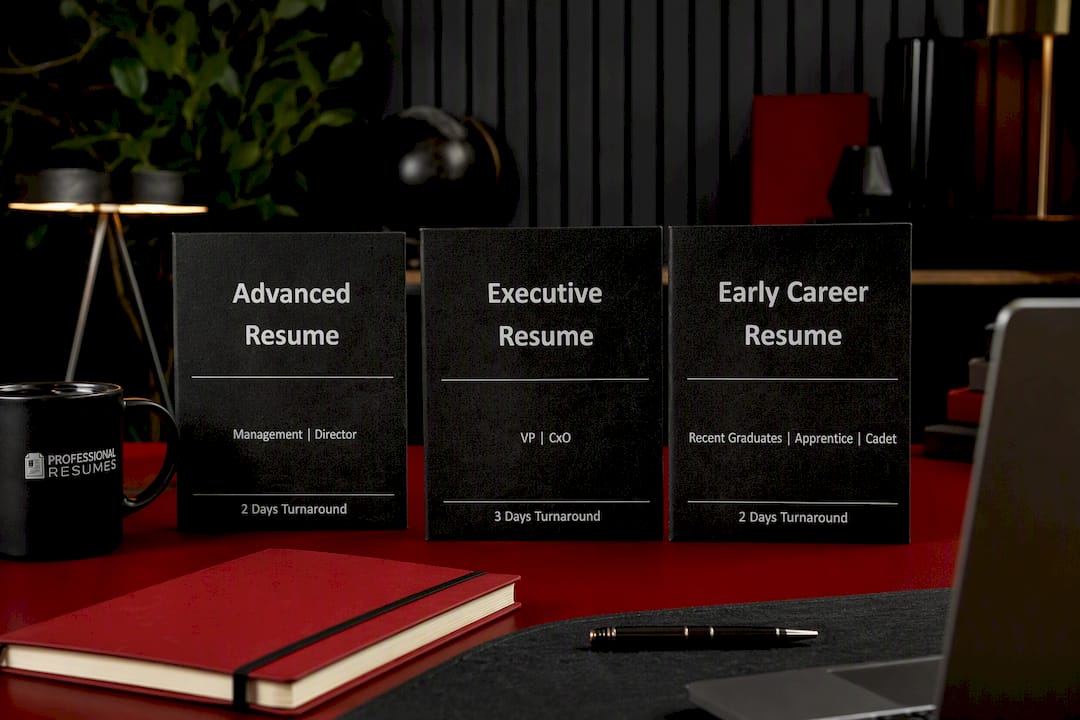
- Early-career candidates start with our Early Career Resume at $139 one-off.
- Mid-career professionals typically choose our Advanced Resume at $239 one-off.
- Senior leaders facing board-level scrutiny use our Executive Resume at $289 one-off.
- Every tier, along with our Next Step Resume option, is listed in our full shop.
- We also offer a LinkedIn profile optimization service to align your public profile with your resume exports.
A consultation starts the process: we review your current material, discuss your target roles, and produce a tailored draft with revision rounds built in, backed by client testimonials and documented placement outcomes.
FAQ
What do most resumes look like in 2026?
Most strong resumes in 2026 follow a reverse-chronological structure with a short, role-specific summary, quantified bullets, and clean single-column formatting built for both ATS parsing and human review, as outlined in Coursera’s resume guidance. Decorative templates and dense keyword lists are falling out of favour.
What is the best format for a resume in 2026?
A single-column, reverse-chronological PDF with consistent headings remains the safest default for ATS compatibility. Some job seekers are also maintaining a structured master file, such as one built on the ResumeJSON specification, to generate tailored exports more reliably.
What format should a resume use for the most reliable parsing?
A clean, single-column layout with standard fonts and explicit dates and titles parses most reliably across applicant tracking systems, as detailed in our ATS-friendly formatting guidance. Keeping a plain text backup version avoids issues when a system rejects styled files entirely.
What are the 5 P’s of a resume?
Definitions of the “5 P’s” vary across career coaching sources, so there is no single agreed version. A common framing covers purpose, precision, proof, presentation, and proofreading, each pointing to a clear goal, specific language, quantified evidence, clean layout, and careful editing before submission.
Sources
- 2026 Global AI in Hiring Report
- ResumeJSON specification (SPECIFICATION.md)
- Resume tips — Coursera
- When using AI leads to brain fry — HBR