
A resume consultation is only as useful as the questions you bring to it. The strongest ones are specific: does this document support the role I am targeting, which section needs the most work, and what should be revised first. Walk in with a target job posting, one clear goal and a short list of questions, and the session produces decisions instead of general opinions. This guide gives you those questions, grouped by what you are trying to solve, with the preparation behind each.
TL;DR
- Start with one goal sentence and two or three focused questions. INFORMS recommends exactly this approach for a resume review.
- Bring your current resume, supporting documents such as job descriptions or performance reviews, and a posting for the role you want.
- Raise problem areas yourself: gaps, short roles, unrelated experience, or international credentials. A consultation can only address what it knows about.
- Ask how your resume will be screened by an applicant tracking system (ATS) and how it will be tailored to each application.
- Confirm in advance what you receive: the number of revisions, the documents included and the timeline.
Table of Contents
- Why the questions matter more than the meeting
- Prepare before you ask anything
- Core questions for any resume consultation
- Questions about ATS screening, keywords and format
- Questions if you have a gap, a pivot or a short tenure
- Questions for newcomers and international students
- Questions for executives, healthcare professionals and federal applicants
- Questions about LinkedIn and cover letters
- Questions about the process itself
- What a good answer looks like
- Our perspective
- Put your questions to work
- FAQ
- Sources
Why the questions matter more than the meeting
Most people treat a consultation as a place to be told what is wrong. That produces a list of opinions, and opinions differ. Monster notes that if you ask ten people to review your resume you will likely get ten different views, some of them conflicting, so the advice of resume writers and hiring managers in your target industry deserves the most weight.
A structured set of questions turns that spread of opinion into a decision. It also changes the quality of the work that follows. A writer who knows your target role, your constraints and the one outcome you need can make choices about structure, emphasis and keywords. A writer working from a generic request can only make the document tidier.
For executives, returners and newcomers, the stakes are higher. A C-suite resume is read under scrutiny by search firms and boards. A resume with a gap or foreign titles can be set aside in seconds. In each case, a consultation that surfaces the right issues early saves rounds of revision later.
Prepare before you ask anything
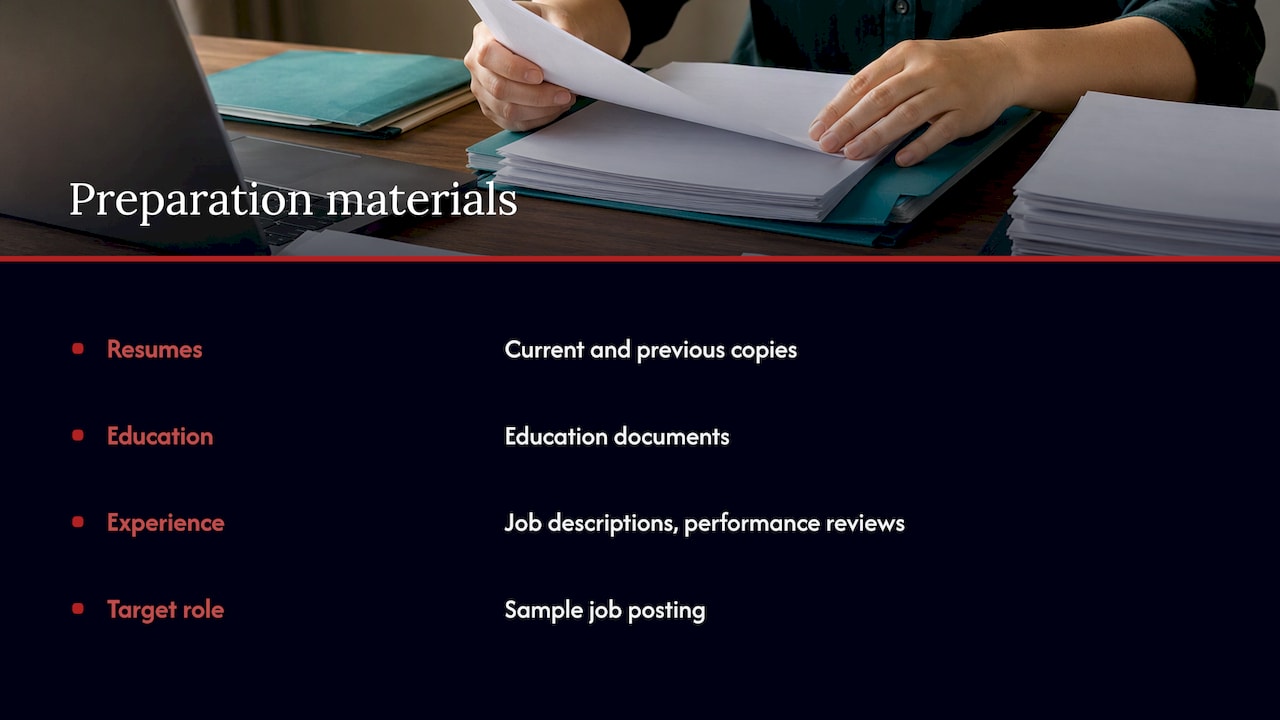
Questions are only as good as the material behind them. Canada’s competency framework for career development professionals, published by CDPC/CEDC, describes what a competent consultant gathers before advising: your current and previous resumes, education documents, experience documents such as job descriptions and performance reviews, and a sample job posting for the desired role. The consultant then reviews it all for information gaps or inconsistencies.
You can make that step faster by assembling it yourself.
What to bring
- Your current resume, in the version you have actually been sending out.
- One to three postings for the roles you want. Carleton’s Career Services advises bringing a copy of your resume together with a job posting so tailoring can be discussed concretely.
- Evidence of results: performance reviews, project summaries, revenue, headcount, budget or patient and caseload figures.
- Education and credential documents, particularly if any were earned outside Canada.
- A timeline of your employment, including dates for any break in work.
Write your goal sentence
INFORMS suggests completing this sentence before the session: “By the end of this session, I would like to have a clearer understanding of…” A good ending names a decision, such as whether to lead with your summary or your experience, or whether to pursue a leadership role or a lateral move. Prioritize the issue that is most immediate. If an application closes next week, the goal is different from a six-month search.
Prepare one experience example
INFORMS also recommends one brief example covering the problem you faced, your contribution and the result. This is the raw material for a strong bullet, and it shows a writer how you think about your own impact. For an executive, it might be a turnaround you led. For a healthcare professional, it might be a process change on a unit. For a newcomer, it might be a project completed under a different regulatory system.
Core questions for any resume consultation
These work for every reader, whatever the career level.
- Does this resume support the role I am targeting? This is the central question, and it should be answered against a real posting, not in the abstract.
- Which section needs the most improvement? Ask for a ranking. Summary, experience, skills and education rarely need equal attention.
- What should I revise first? A sequence prevents you from polishing a section that will be cut.
- What is your first impression in ten seconds? Recruiters skim. The opening third of the page carries most of the weight.
- What on this resume is strongest, and is it visible enough? Strong achievements are often buried under routine duties.
- What is missing that a hiring manager in my field would expect? This is where industry familiarity shows.
- Where does the document describe duties instead of outcomes? Carleton recommends action-based SAR statements (situation, action, result) with relevant action verbs, and a good consultation should find every bullet that lacks the result.
Think like the employer
CPA Alberta’s career centre resume handbook frames the resume as solving the employer’s problem rather than yours. Before writing, it suggests asking why the role exists, what problems it solves, where it sits in the organization and how it contributes to strategic decisions. That is a useful question to put to a writer: how will this document answer why this employer needs me in this seat? If the discussion stays on your history rather than their need, the document will read as a career summary.
Questions about ATS screening, keywords and format
Many Canadian employers use an applicant tracking system to sort applications before a person reads them. Carleton explains that an ATS screens resumes for specific keywords, experience, background or training. The CPA Alberta handbook adds that recruiters enter keywords and set a minimum score below which resumes are not forwarded, so the exact wording of the job description should appear in your resume. It also notes that a resume with the right keywords is still discarded when it is written in a meaningless way. Keywords get you read; clear writing keeps you in the pile.
Questions to ask:
- How will you identify the keywords for my target roles, and where will they sit in the document?
- How will the file be formatted so that it reads correctly in an ATS?
- Which resume format suits this opportunity: chronological, functional or competency-based? The CDPC/CEDC framework lists these as the options a consultant should guide you through.
- How will the resume be adjusted for each application, and how much can I change myself without damaging the structure?
- What personal details should be left off? The same framework names photo, age, marital status, gender, religion and political affiliation as information to exclude.
If you want to prepare in advance, our guides on mapping resume keywords for ATS and choosing a Canadian resume format walk through both topics, and the comparison of a modern and a traditional resume helps if design is a concern.
Questions if you have a gap, a pivot or a short tenure
This is where many readers hold back, and it is the point at which the consultation matters most. The CPA Alberta handbook lists the red flags that recruiters look for: job hopping, employment gaps without explanation, decreasing responsibilities, short-term employment, essay-length paragraphs, fluff words, resumes without dates and irrelevant content. The CDPC/CEDC framework says consultants should minimize the impact of elements perceived negatively, including employment gaps, short employment terms, incomplete education and limited Canadian experience.
Monster’s advice to anyone seeking feedback is to name the problem areas yourself: employment gaps, job-hopping or unrelated work history, along with your career goal and a few target postings. Feedback is constructive when the reviewer knows what you are worried about.
Bring these questions:
- How should the gap be presented: by dates alone, with a short line of explanation, or with activities such as study, caregiving or volunteering?
- Which earlier roles should be condensed, and which deserve more space for the job I want now?
- If I am changing fields, which transferable skills lead the document?
- Is there a pattern of short roles that needs context, and where does that context belong, in the resume or the cover letter?
- What should I say about the gap in an interview so it matches the resume?
Our guide to resume fixes for career gaps in Canada covers how to show the break using years only, which is worth reading before your session.
Questions for newcomers and international students
If your experience was gained outside Canada, the resume has an extra task: it must make that experience legible to a Canadian employer. The same framework lists limited Canadian experience among the issues a consultant should address, so raise it directly.
- How should foreign job titles, employers and credentials be described so a Canadian recruiter understands the level?
- Which achievements translate directly, and which need context such as company size or sector?
- How do I handle references, volunteer work and a first Canadian role?
- Which Canadian conventions apply, such as length, no photo and no personal details?
- How should my LinkedIn profile match the resume so that the story is consistent?
We cover this audience in more detail in our pages on resume writing for newcomers to Canada, the immigrant resume for Canada and the international student resume.
Questions for executives, healthcare professionals and federal applicants
UFV’s career centre resume checklist notes that some industries have specific resume guidelines, and advises checking the job posting and researching the hiring organization for any required formatting or information. That is the reason a general review is a weak starting point for specialized searches.
Executives
A C-suite resume is judged on scope and outcomes. Ask how the document will present P&L ownership, transformation led, board-level exposure and organizational results. Ask what belongs in a one-paragraph leadership summary and what moves to the body. Ask how the document will read to a retained search firm compared with a hiring board. Discretion also matters: if you are searching while employed, confirm how the consultation handles confidentiality.
Healthcare professionals
Ask how licensure, registration, clinical specialties, patient volumes, quality metrics and continuing education should be ordered. Ask whether the format should favour a one-page summary of credentials or a fuller record, based on the employer type: hospital, public health, long-term care or private practice.
Federal government applicants
Federal postings often assess you against stated criteria, and the resume must show each one clearly. Ask how every essential qualification will be evidenced and how length and detail should differ from a private-sector resume. Our guide to federal resumes in Canada explains where polished formatting causes problems in Government of Canada applications. If an academic or research role is in view, when to use a CV or a resume is a relevant question too.
Questions about LinkedIn and cover letters
Your resume does not work alone. Recruiters check your LinkedIn profile, and your cover letter is the first place a reader meets your argument. Ask:
- Does my headline and summary say the same thing as my resume, in the language of my target role?
- Which achievements should appear in both, and which only in one?
- What should the cover letter add that the resume cannot, such as a reason for the move or the link to the company’s stated need?
- Is my professional presentation consistent across documents? A coherent professional brand is built from many small decisions, and consistency across documents is one of them.
We offer a LinkedIn profile optimization service for readers who want the profile and resume developed together.
Questions about the process itself
A consultation is also the right time to clarify how the work will run. BBB guidance recommends confirming the turnaround time and having a contract that outlines services, timeline and costs. Monster’s resume expert advises finding out exactly what you will receive and whether a follow-up review is included after you make the suggested changes.
Useful questions for any provider:
- Will I speak with my writer directly, and how many conversations are included?
- How many revisions are included, and over what period?
- Which documents are part of the price: resume, cover letter, LinkedIn?
- What is the timeline from the first conversation to the final file?
- Will I receive an editable version I can update myself later?
- How is my information kept confidential?
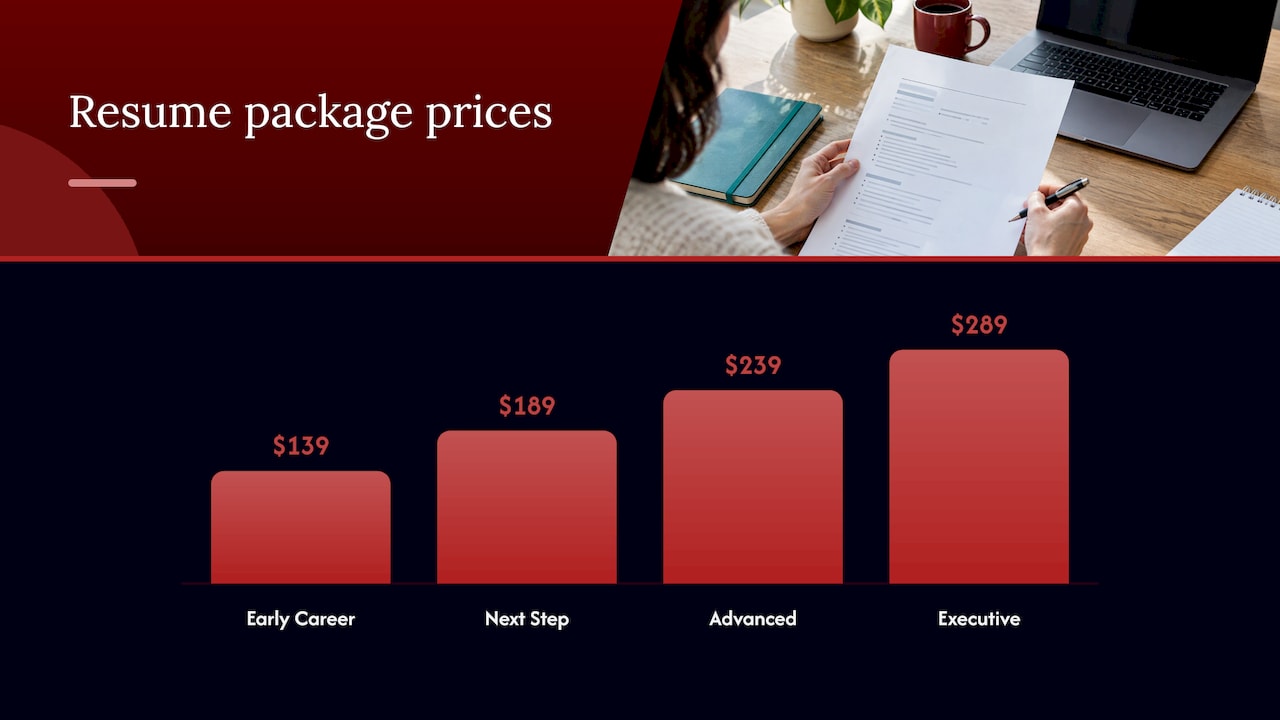
For our own services, the answers are stated plainly: our process includes extensive consultations and multiple revisions, and the documents are tailored to your goals and industry. Published prices, as read on 16 September 2026, are $139 for the Early Career Resume, $189 for the Next Step Resume, $239 for the Advanced Resume and $289 for the Executive Resume, each a one-off fee.
What a good answer looks like
The quality of a consultation shows in the answers. A useful answer is tied to your posting, your numbers and your constraint. It says what to cut, what to move and what to add, and it gives a reason from the employer’s point of view. A vague answer says the resume “could be stronger”.
INFORMS also makes a point worth remembering: a review is meant to give focused feedback so you can make informed revisions, not to rewrite the document for you. A writing engagement is different. It exists to produce the document with you, using your answers as the raw material. Knowing which kind of session you are in sets the right expectations.
Our perspective
Most resumes fail for a reason that is visible in the first conversation. The person has done substantial work, but the document records responsibilities instead of results, and it is addressed to nobody in particular.
That is why we begin with consultation rather than a template. We work with executives preparing for C-suite searches, professionals returning after a gap, newcomers adapting to the Canadian market and healthcare and industry specialists. Each of them has a different question to answer. The executive must show scope and outcomes under board-level scrutiny. The returner must make a break read as a decision. The newcomer must make foreign experience legible.
Our approach is personalized and informed by industry trends, with ATS-friendly formatting and revisions built into the work. The best preparation you can bring is the material in this article: a goal, a target posting, one worked example and the honest list of what concerns you. With those in hand, working directly with your writer becomes a precise exchange, and the resulting document speaks to the employer you want.
Professional
Put your questions to work
If you already have a target role and a few questions written down, you are ready for a consultation. Our resume packages are matched to career level: the Early Career Resume, Next Step Resume and Advanced Resume are listed with their prices on our shop page, and the Executive Resume is available there too at $289. Each includes the consultation and revision process described above, so your questions about ATS, gaps, LinkedIn and format are addressed in the work itself.
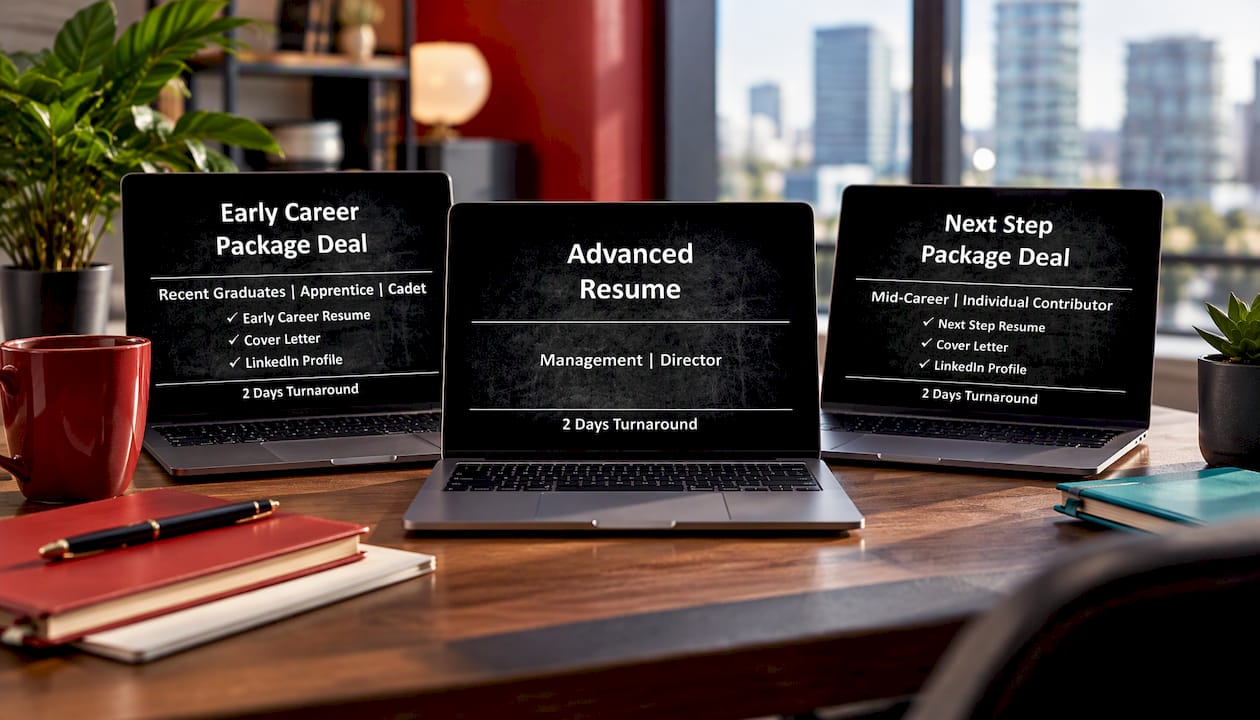
If your search is at the early career or mid-career stage, the Advanced Resume at $239 is built for experienced professionals, while the Next Step and Early Career package deals bundle supporting documents. Bring your goal sentence, your posting and your worked example, and we will begin there.
FAQ
How long should I prepare before a resume consultation?
An hour is usually enough. Gather your current resume, one to three target postings, evidence of results and your employment dates, then write a goal sentence and two or three questions. The preparation matters more than the length of the meeting.
Should I mention my career gap during the consultation?
Yes. Name it at the start, together with any short tenures or unrelated roles. A writer can only decide how to present a gap, by dates, a brief line or related activity, when they know the full timeline. Raising it early also lets you agree on how to discuss it in interviews.
Do I need a different resume for every job?
You need a strong core resume that is tailored for each application. Carleton advises tailoring resumes and cover letters to each position, and ATS screening rewards the wording of the specific posting. Ask your writer which parts are fixed and which parts to adjust.
What personal information should stay off a Canadian resume?
The CDPC/CEDC framework names photo, age, marital status, gender, religion and political affiliation as information to exclude. Your name, location, phone, email and LinkedIn link are the standard contact details.
What is the difference between a resume review and resume writing?
A review gives focused feedback so you can revise the document yourself. Writing produces the document with you, based on consultation and revisions. Decide which you need before the session so your questions fit.
Sources
- INFORMS: How to Choose and Prepare for a Resume Review or Career Coaching Session
- Carleton University Career Services: Resume, Cover Letter and CV Guides
- CDPC/CEDC: 15.1 Work with Clients to Develop Résumés
- CPA Alberta: Cover Letter and Résumé handbook, 2022
- Monster: How to Ask for a Resume Critique
- BBB: Should you hire a professional resume writer?
- UFV Career Centre: Resume Review Checklist and Rubric